

A Lubbock County game room owner followed through on his threat to sue the county after commissioners sharply reduced operating hours and imposed additional requirements on the businesses.
Eric Thompson, owner of El Fronteriso in southeast Lubbock County, filed the lawsuit in March 2026. He is asking a court to invalidate parts of the county’s amended game room ordinance, arguing that commissioners exceeded their authority and adopted at least one significant change without adequate public notice.
The county denied wrongdoing. The case remains pending, but an interim agreement has already changed how some of the disputed rules are being enforced.
Under an agreed temporary court order issued in April, game rooms may operate from 10 a.m. to 10 p.m. seven days a week while the lawsuit proceeds. The county also cannot require the businesses to display signs stating that gambling is illegal in Texas.
Other portions of the amended ordinance remain in effect.
Commissioners imposed weekday-only hours
Lubbock County commissioners approved the latest changes in February. Among the most consequential was an amendment from Commissioner Mike Dalby limiting game room operations to 8 a.m. through 5 p.m., Monday through Friday.
Before the amendment, permitted businesses could operate from 10 a.m. to 11 p.m. Sunday through Thursday and until 2 a.m. on Friday and Saturday nights. The change reduced the available operating time from 97 hours a week to 45.
The revised ordinance also required exterior doors to remain unlocked while a game room was open, prohibited the transfer or division of certain permits and created a hearing board to consider permit disputes. Additional provisions called for signs informing customers that gambling is illegal in Texas and allowed civil penalties of as much as $10,000 per violation.
Dalby and other county officials said the tighter restrictions were intended to address criminal activity and protect residents. County officials have associated game rooms with robberies, shootings, drug activity and other offenses.
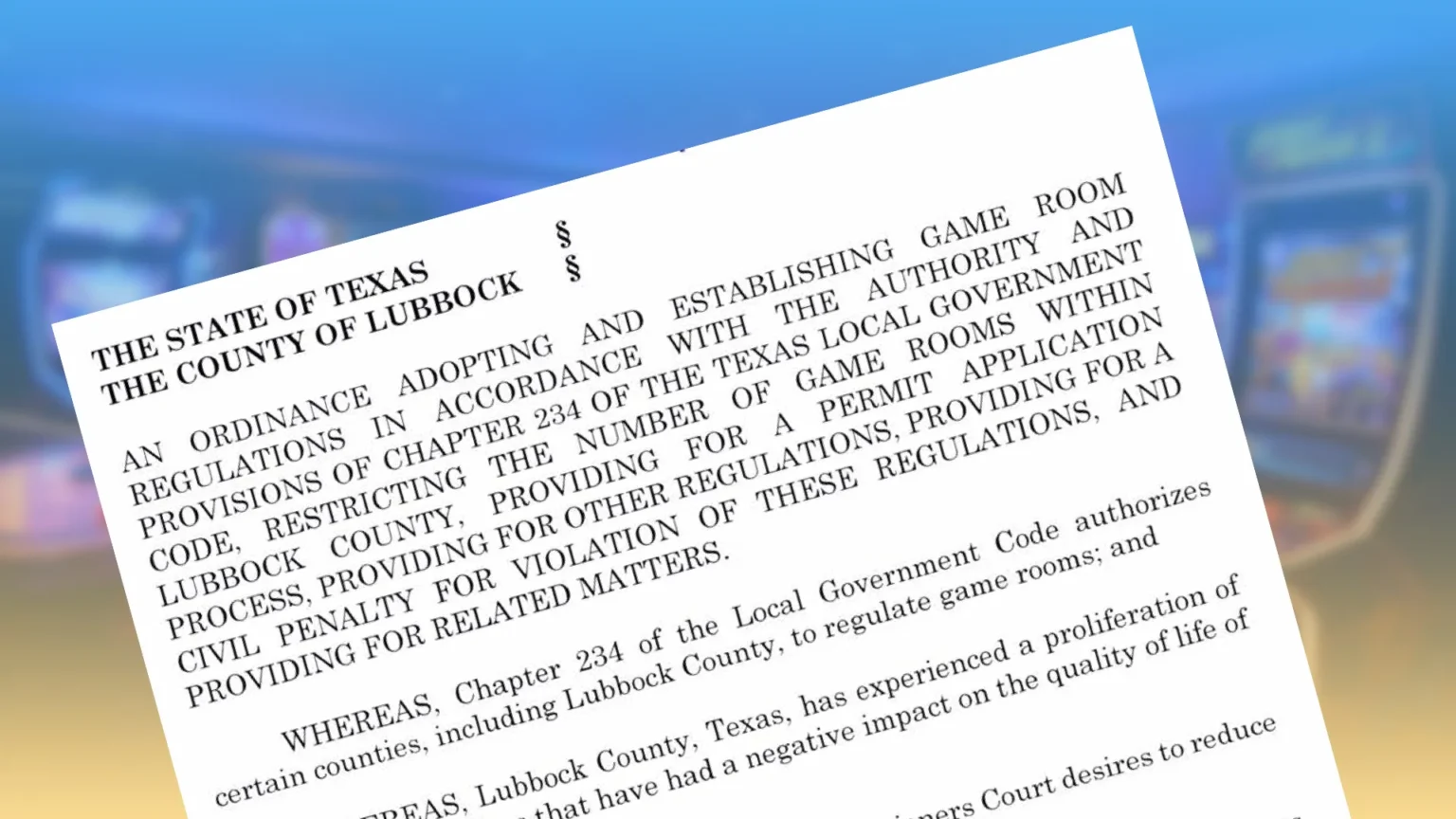
The commissioners’ action followed adoption of the county’s original game room ordinance in 2024. That ordinance required permits for businesses and their employees, background checks and security measures. It also limited the number and location of new game rooms while allowing existing businesses to seek grandfathered status.
Lawsuit challenges county’s authority
Thompson’s lawsuit focuses on the operating hours, unlocked-door requirement and mandatory signs. It does not seek monetary damages, according to KCBD’s report on the filing. Instead, Thompson wants the disputed provisions declared unconstitutional or otherwise unenforceable.
The lawsuit alleges that the operating-hour restriction amounts to an uncompensated regulatory taking because it significantly limits the business’s ability to generate revenue. Thompson also argues that requiring the doors to remain unlocked creates a security risk by preventing employees from using a magnetic-lock system to screen people entering the building.
Another claim concerns the Texas Open Meetings Act. Although the commissioners’ agenda included proposed changes to the game room ordinance, the weekday-only operating schedule was introduced as an amendment during the meeting. Thompson contends that the public notice did not adequately identify that proposal.
Commissioner Jason Corley, who supported the original regulatory framework, expressed concern after the February vote that some of the new restrictions could invite litigation and potentially place the broader ordinance at risk.
Lubbock County responded to the case with a general denial rather than addressing each allegation individually. The judge originally assigned to the lawsuit recused himself, and visiting Judge Patrick Pirtle was appointed to oversee the case in the 237th District Court.
Texas law permits regulation but does not legalize gambling
Texas counties have statutory authority to regulate game rooms to protect public health, safety and welfare. Under Section 234.133 of the Texas Local Government Code, counties may restrict where game rooms operate, limit their number and prohibit them near schools, churches or residential neighborhoods.
Counties may also require permits, conduct inspections and pursue civil or criminal penalties for ordinance violations. However, Thompson’s case asks the court to determine whether Lubbock County’s specific restrictions go beyond that delegated authority or violate constitutional protections.
A county game room permit does not make otherwise illegal gambling lawful. Texas generally prohibits gambling devices but recognizes a limited exception for machines used solely for amusement that award qualifying noncash merchandise.
Under Section 47.01 of the Texas Penal Code, a qualifying prize must have a wholesale value of no more than 10 times the price of one play or $5, whichever is less. Cash payments do not qualify for that exception.
Thompson maintains that El Fronteriso complies by awarding noncash prizes rather than money. Sheriff Kelly Rowe has argued that many game rooms operate as illegal gambling businesses and has denied selectively targeting Thompson.
Dispute continues as game rooms close
The lawsuit has unfolded alongside a broader reduction in the number of game rooms operating in unincorporated Lubbock County. By June, nearly half of the businesses that had operated the previous year had closed, lost permits or surrendered them, according to records reviewed by Lubbock Lights.
Thompson temporarily closed El Fronteriso in April while separate property-forfeiture proceedings were pending. Misdemeanor ordinance charges filed against Thompson and an employee were later dismissed, although the forfeiture dispute and the civil lawsuit continued.
The temporary order governing operating hours does not resolve the underlying disagreement. The court must still decide how far Lubbock County may go in regulating a legal game room—and whether commissioners followed the required process when they tightened the rules.