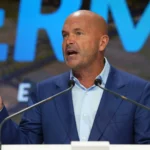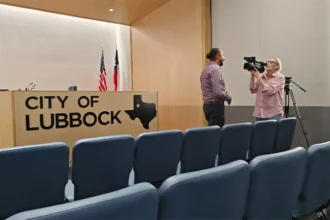


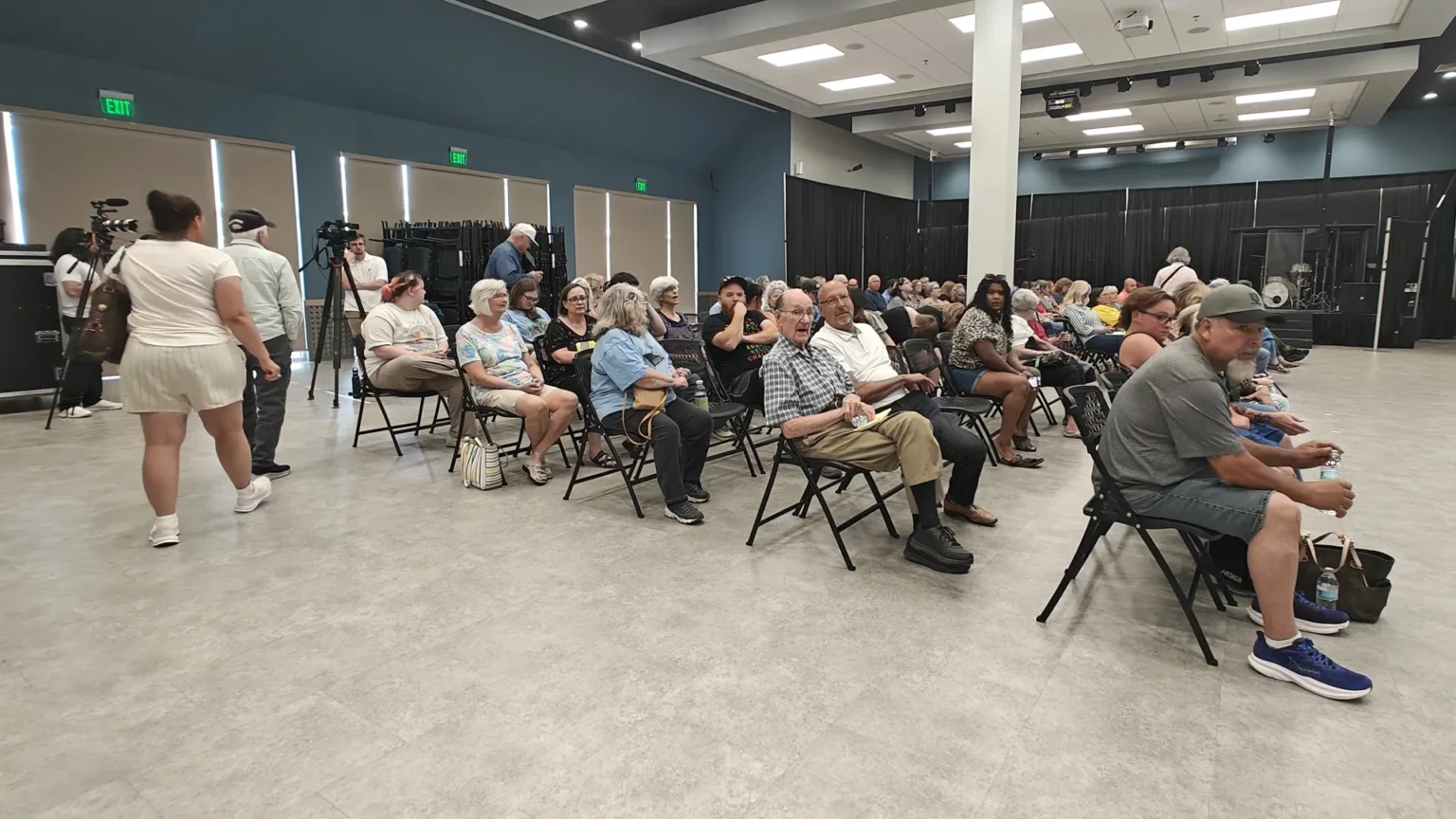
LUBBOCK, Texas — A community meeting opposing large-scale data centers ended tensely after an audience member shouted and used profanity at Mayor Mark McBrayer, prompting the mayor to say he would not accept disrespectful treatment.
About 100 people attended the July 8 gathering at the YWCA in central Lubbock. Citizens of Lubbock Against Data Centers and Save Lubbock organized the meeting as part of their campaign for an 18-month moratorium on new large-scale data centers within city limits.
Much of the event focused on concerns about water consumption, electricity demand, noise and whether the facilities would create enough permanent jobs to justify their effects. The confrontation occurred during a question-and-answer period near the end.
An audience member asked how Lubbock would benefit from data centers, whether the advantages outweighed the disadvantages and whether local officials could be benefiting personally.
Organizer Stephen Sanders repeated the question and asked whether city officials were receiving money “under the table.” No evidence supporting such an allegation was presented at the meeting.
McBrayer denied receiving an offer, payment, favor or other personal benefit from a data-center company or developer. He added that campaign contributions are disclosed in public reports.
The mayor then discussed why city officials recruit commercial and industrial development. Property taxes collected from homes do not necessarily cover the full cost of police, fire protection, streets and other municipal services, he said, making revenue from business property important to the city’s finances.
McBrayer cited Leprino Foods’ Lubbock manufacturing plant as an example of a major industrial property that generates tax revenue and supports employment.
Some audience members objected to that comparison. Community activist Phyllis Gant argued that the Leprino plant should not have been placed in its north and east Lubbock location and questioned how many of its employees live in the surrounding community.
Several people began talking over one another. When McBrayer said not everyone agreed that industrial development would make life worse, a man seated behind him shouted and used profanity.
“I’m not going to sit here and take that kind of treatment,” McBrayer responded, according to Lubbock Lights’ account of the meeting. “I have not been disrespectful to you, and I expect you to be respectful of me, please.”
Some attendees applauded the mayor. Sanders took back the microphone, called for order and ended the gathering with a prayer.
Afterward, Sanders said the man had become too loud and that participants could have handled the disagreement better. He nevertheless characterized most of the meeting as constructive and credited McBrayer with attending and giving opponents an opportunity to question him.
Sanders also acknowledged that it was not fair to accuse public officials of accepting improper payments without evidence. He said, however, that residents’ suspicions reflected a lack of confidence in the information they had received about potential projects.
Campaign seeks 18-month pause
The meeting’s primary purpose was to support a petition for an 18-month moratorium on data-center development.
Sanders has said organizers are not necessarily seeking a permanent prohibition. They instead want time for an independent examination of the facilities’ environmental, utility and economic effects.
“We’re not saying no forever,” Sanders told KCBD while discussing the campaign. He said the proposed pause would allow residents and council members to determine who would benefit and how the projects would affect Lubbock.
Save Lubbock must collect 2,410 valid signatures from registered voters for the proposal to advance. Organizers established July 28 as their internal collection and verification target, while an email from City Secretary Courtney Paz listed an official submission deadline of 5 p.m. Aug. 3.
If sufficient signatures are certified, the City Council could approve the proposed moratorium. If council members reject it, the measure could proceed to a citywide election.
McBrayer opposes halting the city’s work. He said officials are already researching the issues that petition supporters want examined and are preparing safeguards before any project reaches the council.
The mayor also argues that a city moratorium could push developers into unincorporated Lubbock County, where municipal zoning and utility regulations would not apply.
As of the meeting, the City Council had not approved a large-scale data center and did not have an active proposal awaiting a vote.
Possible regulations under consideration
At a city-hosted meeting the previous evening, staff presented possible standards that would restrict large-scale data centers to light-industrial and general-industrial zoning districts. Each project would require a specific-use permit and hearings before the Planning and Zoning Commission and City Council.
The city’s published draft standards also contemplate:
- Closed-loop or air-dry cooling systems to reduce municipal water demand
- A water-reservation fee for large users
- A power-use study prepared by a licensed engineer
- Larger setbacks from neighboring property
- Noise limits and sound-absorption requirements
- Screening, landscaping and lighting controls
- Air-quality compliance documents
- A decommissioning plan for on-site power generation
Those recommendations had not been adopted at the time of the YWCA gathering.
Most speakers at both meetings said regulation would not adequately protect residents. They argued that Lubbock’s limited water supplies, potential electric-rate effects and quality-of-life concerns justified a moratorium or outright ban.
Supporters of regulated development point to possible property-tax revenue and contend that projects inside the city would be subject to greater oversight than facilities built in the county.
The sharp exchange at the YWCA illustrated that the debate is no longer limited to engineering standards and utility projections. It has also become a dispute over public trust, industrial development and whether potential economic benefits are worth the risks residents believe data centers could bring.