


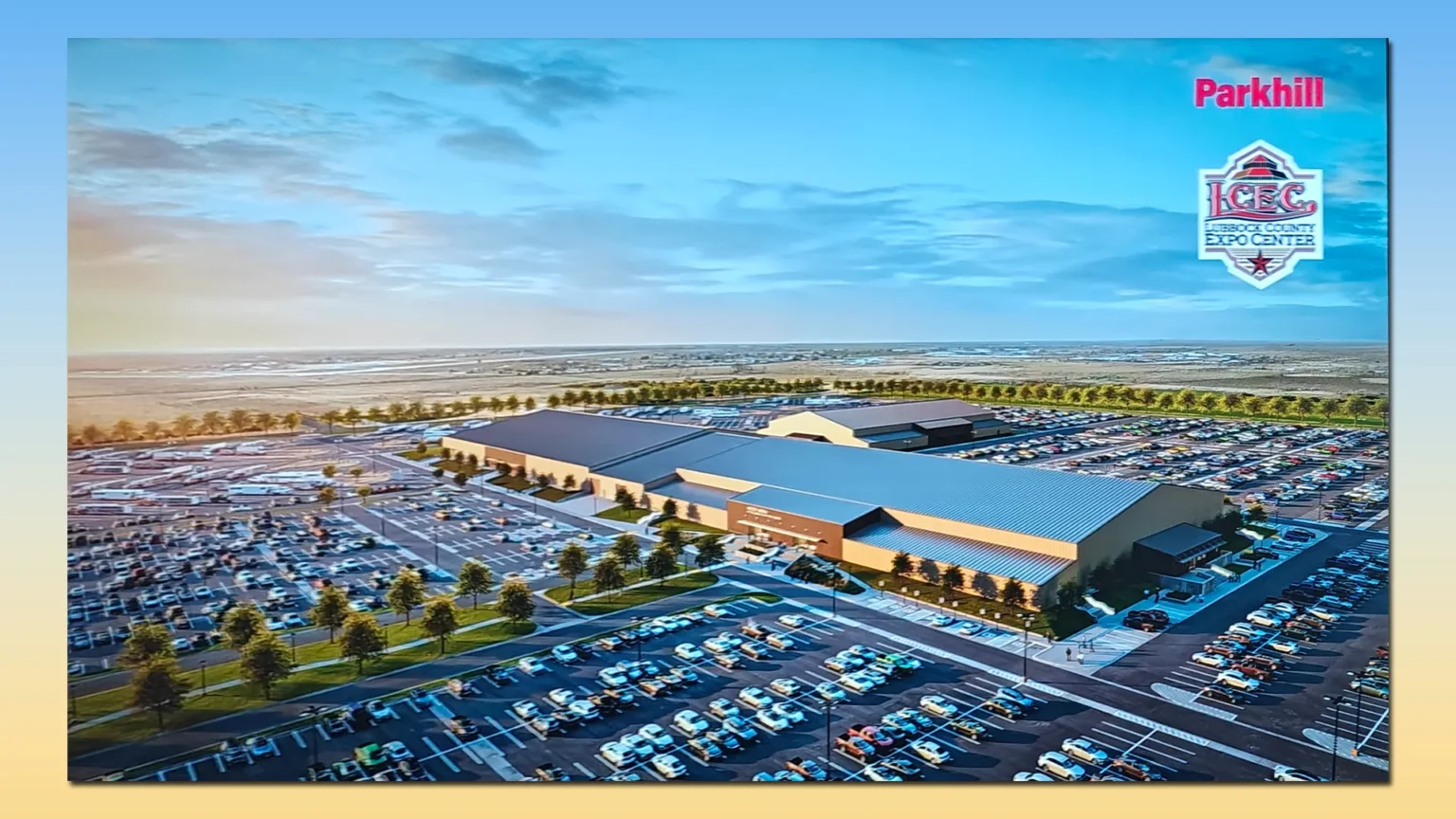
Lubbock County’s proposed $67 million venue has advanced, but organizers must secure private financing, complete operational agreements and obtain state approval before the county issues approximately $32 million in bonds.
LUBBOCK, Texas — The long-planned Lubbock County Expo Center is moving forward, although several financial and legal requirements must be completed before the county can borrow money and construction can fully begin.
The county’s current timetable calls for issuing approximately $32 million in bonds before the end of 2026. That debt would be repaid with voter-authorized hotel occupancy and short-term vehicle-rental taxes rather than local property taxes.
The county’s private partner, Lubbock County Expo Center Inc., or LCEC, is responsible for raising the remaining private portion of the project’s estimated $67 million cost.
County civil attorney Ashley Cox has helped coordinate the agreements, financial documents and approvals needed to advance the public-private partnership after the project stalled amid unanswered questions.
“Everyone, I think, that I’ve spoken to, believes that we’re taking care of our business and moving forward,” Cox said during a June meeting of the county’s Expo Center Local Government Corporation.
What the current Expo Center plan includes
The project is planned for an approximately 80-acre site near North Loop 289 and North University Avenue.
The revised design calls for a building of roughly 165,000 square feet, an increase from an earlier 129,000-square-foot proposal. Architectural changes added concourse and concession space.
Current plans include:
- Approximately 5,500 permanent seats
- Capacity for as many as 7,000 people when floor seating is added
- A concrete event floor that can be covered with dirt for rodeos, agricultural shows and equestrian events
- An estimated construction cost of $55 million
- A total development cost of approximately $67 million
The facility would be owned by Lubbock County but leased to LCEC, which would oversee operations and could hire a professional company to manage day-to-day activities.
County attorney helped reorganize the process
The project’s oversight board, known as the Local Government Corporation, or LGC, declined to endorse an earlier proposal in November 2025. Members said they lacked sufficient financial information about private fundraising, operating expenses and the division of responsibilities between the county and LCEC.
Cox began coordinating the process in December, organizing information from LCEC, architects, financial advisers and the county’s specialized bond attorneys.
That work produced a timetable and a series of conditions intended to protect public money. In March, the LGC allowed the project to proceed only if specific financial requirements were satisfied.
LCEC must have either its private donations in hand or an approved bank loan capable of covering any temporary fundraising shortfall before the county issues its bonds. The nonprofit’s bank debt must also remain legally separate from the county’s bond debt.
The plan additionally requires the county to maintain a $5 million reserve for unexpected costs. Surplus hotel and rental-car tax revenue could be used to cover an operating deficit if the Expo Center does not generate enough revenue to pay all its expenses.
Lease approved after divided vote
One of the first major items on the timeline was a lease between the county and LCEC.
County commissioners approved that agreement June 22 on a 3-2 vote. Commissioners Jason Corley, Cary Shaw and Jordan Rackler supported it, while County Judge Curtis Parrish and Precinct 1 Commissioner Michael Dalby opposed it.
Parrish and Dalby said they supported constructing an Expo Center but questioned whether the lease provided enough protection and control for the county.
Under the 14-page lease agreement, LCEC would pay annual rent of $1. The initial term is 27 years, including an anticipated two-year construction period followed by 25 years of operation. Two additional 25-year extensions are possible if the parties agree.
LCEC would control event scheduling and revenue opportunities such as naming rights. It would also be responsible for maintenance, utilities, insurance, financial reporting and liabilities arising from operating the facility.
The county would retain inspection rights, approve any outside operator and appoint at least four members of LCEC’s board, although county representatives could not hold more than 49% of the board seats.
The agreement identifies several events that could place LCEC in default, including abandonment of the project, unauthorized liens, certain bankruptcy proceedings and failure to meet maintenance, insurance or reporting obligations.
A detailed examination of the lease and the commissioners’ competing positions is available in coverage of the 3-2 approval vote.
What must happen next
The lease vote moved the project forward, but it did not authorize construction or the county’s bond sale. Several additional steps remain:
1. LCEC must secure its private financing
The nonprofit continues to collect private donations. Because some large pledges may be paid over several years, LCEC is also pursuing a bank loan to provide money while those commitments are collected.
The county’s March resolution requires LCEC to demonstrate that donations or loan proceeds are available before county bonds can be issued.
2. The lease must be assigned as collateral
The prospective bank wants LCEC’s lease rights assigned as security for its loan. That arrangement would not give the bank ownership of the county’s land or building, but it could give the lender rights under the lease if LCEC defaults.
County commissioners must review and approve that assignment. The approval was originally expected in July.
3. Operational protections must be completed
Supporters of the lease said a separate operating agreement would address management standards, financial performance, use of the facility and the county’s remedies if operations do not meet expectations.
Those details are important because the county would own the venue while LCEC or its selected contractor would manage it.
4. The Texas attorney general must review the bonds
Lubbock County’s bond counsel advised officials to put the lease in place before seeking preliminary approval from the Texas Attorney General’s Office.
The approximately $32 million bond package was expected to be submitted for state review in August, according to the project timeline presented to the LGC.
5. Commissioners must authorize the final bond sale
If the attorney general approves the financing structure and LCEC satisfies the private-funding conditions, commissioners would consider final authorization of the bonds in October or November.
Only after those steps are completed can the parties close the financing and move into the project’s major construction phase.
Timetable has already encountered another delay
The LGC was expected to meet July 8 to review additional steps, but the county’s official document center lists that meeting as postponed.
That postponement does not cancel the Expo Center project, but it underscores that the schedule remains dependent on financing documents, public approvals and negotiations among the county, LCEC and its prospective lender.
Lubbock County voters authorized the project’s public funding mechanism in 2018, approving a 2% hotel occupancy tax and a 5% short-term vehicle-rental tax for the venue. The election did not guarantee that the Expo Center would be built under any particular design or financial agreement.
The project is therefore closer to construction than it was during the uncertainty of late 2025, but the lease is one step in a longer process—not the final approval.