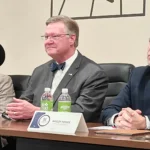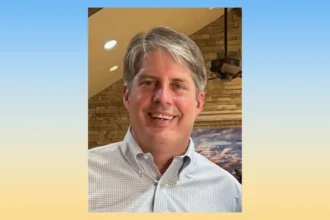



LUBBOCK, Texas — Wells Fargo filed a lawsuit against then-Lubbock County judge candidate Wesley “Wes” Houck, alleging that he owed more than $16,000 on a credit account. Houck said the debt came from an old business card he did not realize remained unpaid and that he arranged to resolve the balance.
The bank filed the case against Houck on Dec. 30, 2025, in Lubbock County’s 72nd District Court. Public docket information identifies it as Wells Fargo Bank, N.A. v. Wesley E. Houck, case number DC-2025-CV-2158, and classifies it as a debt-collection case. The filing date and parties are also listed in the online case record.
According to the complaint, Wells Fargo alleged that Houck failed to make required payments and owed the bank $16,441.70. The bank said the credit line originated in 2014.
Those statements represented Wells Fargo’s allegations at the time the case was filed. Filing a civil lawsuit does not, by itself, establish that the allegations are true or amount to a court judgment.
Houck said he did not know about the problem
Houck told Lubbock Lights that he first learned about the lawsuit after the news organization contacted him.
He said the information surprised him and that he went to a Wells Fargo location in Lubbock to investigate. According to Houck, local bank representatives initially had difficulty identifying the account at issue.
After further research, Houck said he traced the debt to an old business credit account associated with Evergreen Construction, a custom-home-building company he operated in Oregon. He described the account as a business card used more frequently by employees than by him personally.
Houck said the account “slipped through the cracks” after the business was no longer operating as before.
The bank’s lawsuit reportedly listed the credit line as having begun in 2014—the same year Houck associated with the establishment of his former West Coast construction business.
Notices allegedly went to an old address
Houck moved from the Portland, Oregon, area to the Lubbock region with his family around 2022. He later served on the Wolfforth City Council before challenging incumbent Lubbock County Judge Curtis Parrish in the 2026 Republican primary.
Houck said notices concerning the account were sent to his former Oregon address. Because he no longer lived there, he said he did not receive the correspondence and was unaware that Wells Fargo considered the account delinquent.
After identifying the account, Houck said he contacted a company working with Wells Fargo on the debt. He reported reaching an agreement to pay the amount and said he intended to complete the payment within 30 days.
His statement that a payment arrangement had been reached came from Houck. The original report did not include confirmation from Wells Fargo that the balance had been paid or that the lawsuit had been dismissed.
The Dallas law firm that filed the case for Wells Fargo—Waddell Serafino Geary Rechner Jenevein, P.C.—did not respond to Lubbock Lights’ request for comment before the original article was published.
Opponent declined to use lawsuit as campaign issue
The lawsuit became public while Houck was campaigning against Parrish for the Republican nomination for Lubbock County judge.
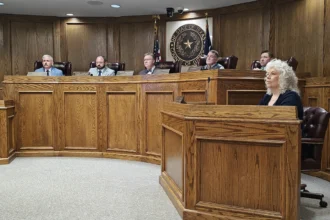
The county judge position combines administrative and judicial responsibilities. The officeholder presides over Commissioners Court while also handling certain probate, guardianship and mental-health matters.
Houck presented himself during the campaign as a longtime businessman who could improve planning, transparency and cooperation within county government. A later KCBD candidate profile described his business background, move to the Lubbock area and service on the Wolfforth City Council.
Parrish said he would not make the Wells Fargo lawsuit a campaign issue. He characterized it as a private dispute between Houck and his creditor and said he intended to leave the matter alone.
The case illustrates the distinction between a creditor’s allegation and a final legal determination. Wells Fargo alleged that Houck defaulted on an account and sought payment through the courts. Houck attributed the situation to an overlooked business account and outdated contact information, while saying he had arranged to pay the balance.