

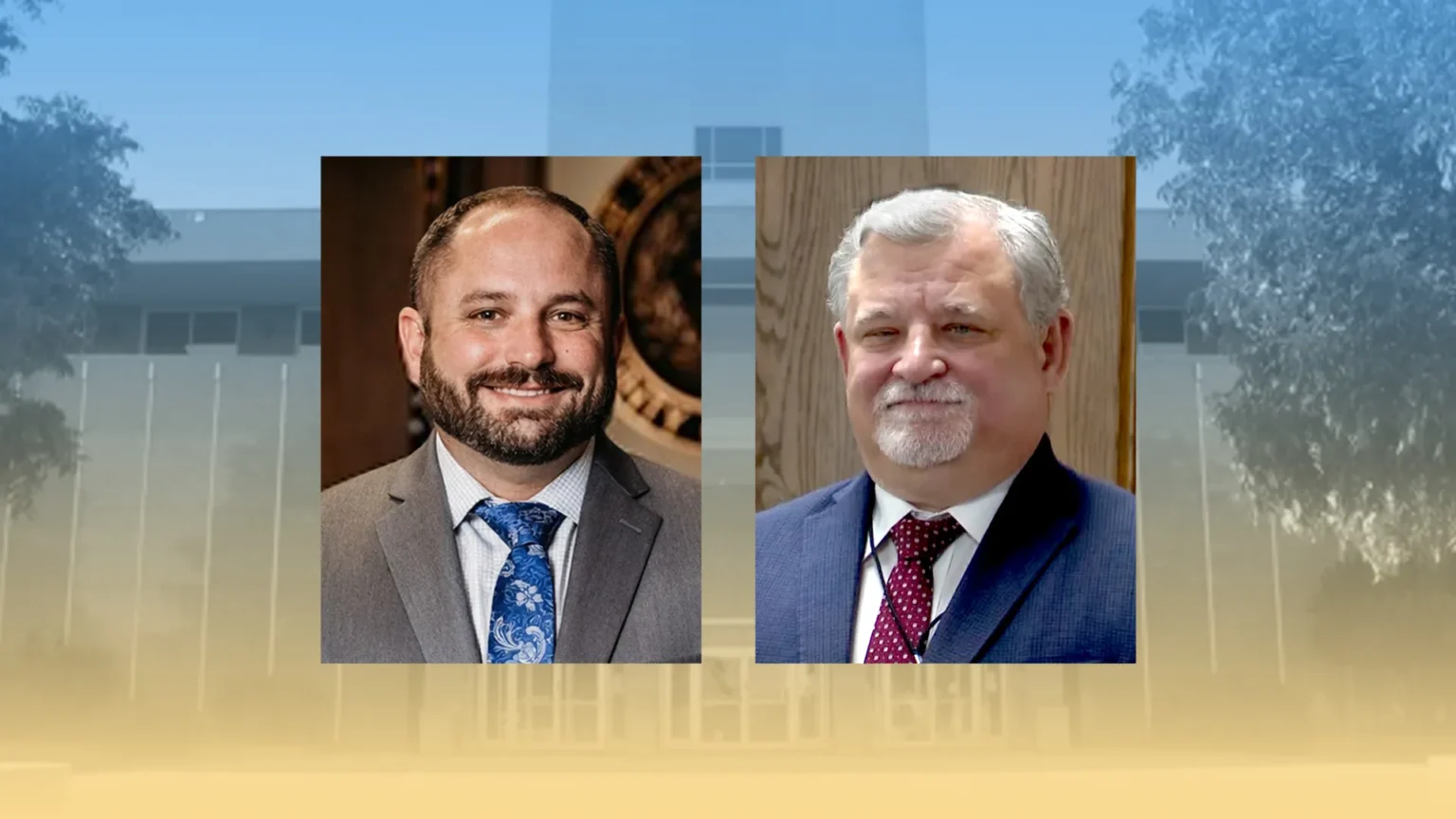
The Texas Supreme Court has ended a temporary pause in the legal fight over Lubbock County’s Precinct 2 commissioner seat, declining to order a visiting district judge to withdraw the ruling that returned Jason Corley to office.
The decision means Corley remains the county-recognized Precinct 2 commissioner while related proceedings continue. It does not constitute a final determination that Corley complied with Texas’ resign-to-run rule, nor does it completely resolve Mark Meurer’s challenges to the district court’s temporary order.
As of July 2026, Lubbock County’s official Precinct 2 webpage continues to identify Corley as the commissioner.
Supreme Court first halted the local case
On Feb. 20, the Supreme Court granted part of Meurer’s request for emergency relief and stayed proceedings in the Lubbock County district court.
The one-page order stopped the 237th District Court from moving forward in The State of Texas ex rel. Jason Corley v. Mark Meurer. It did not decide who was legally entitled to hold office, and it did not direct Corley to step down or return the seat to Meurer.
Instead, the order gave the appellate courts time to consider Meurer’s procedural objections before the local case went to trial. Meurer’s petition for a writ of mandamus—a request for a higher court to compel a lower judge to correct an alleged abuse of authority—remained pending.
The stay also postponed a trial that had been scheduled for April. Lawyers for Meurer and the State of Texas had agreed that the local proceedings should wait until the appellate issues could be considered.
High court later denies Meurer’s petition
On May 1, the Supreme Court denied Meurer’s mandamus petition and lifted its stay. The court’s published orders identify the case as In re Mark A. Meurer, No. 26-0018.
The brief order did not explain the justices’ reasoning. A denial of mandamus does not necessarily mean the Supreme Court agreed with every decision made by the trial judge. It means the court declined to grant the extraordinary relief Meurer requested.
The decision allowed the Lubbock district-court case to resume and left intact, for the time being, visiting Judge Patrick Pirtle’s order recognizing Corley as the lawful officeholder.
A separate interlocutory appeal—an appeal filed before the trial court reaches a final judgment—and other unresolved issues have continued through the state appellate system. The underlying dispute over whether Corley automatically resigned has therefore not received a final merits judgment.
Dispute began with Corley’s congressional campaign
The fight started Dec. 8, 2025, when Lubbock County Judge Curtis Parrish announced that he considered the Precinct 2 seat vacant and swore in Meurer to complete the term.
Parrish argued that Corley triggered the Texas Constitution’s resign-to-run provision by becoming a candidate for Congress while more than one year and 30 days remained in his county term.
Article XVI, Section 65 of the Texas Constitution provides that certain officeholders—including county commissioners—automatically resign if they announce their candidacy or become candidates for another office while their remaining terms exceed that period.
Corley’s term runs through Dec. 31, 2026. He officially announced his congressional candidacy on Dec. 2, 2025—one year and 29 days before the term’s expiration, according to reporting by The Texas Tribune.
The disagreement centers on whether Corley became a candidate earlier.
Parrish relied partly on a Nov. 12 email announcing that Corley had formed an exploratory committee. The email used a “Corley for Congress” address and campaign branding. Evidence presented in court also included a private text in which Corley said he was running for Congress.
Corley maintained that the exploratory committee was intended to determine whether there was enough support for a campaign. He argued that he did not make a definite public announcement until Dec. 2 and that private statements did not amount to a formal declaration of candidacy.
Corley returned after December hearing
Corley sued Meurer the same day Meurer was sworn in, arguing there had never been a lawful vacancy. The State of Texas later intervened through Potter County Attorney Scott Brumley, who was appointed as an attorney pro tem.
The state pursued a proceeding known as quo warranto, which is used to challenge whether someone is unlawfully holding a public office.
After a Dec. 19 hearing, Pirtle ordered Meurer to step aside and recognized Corley as the Precinct 2 officeholder. KCBD’s coverage of the hearing reported that Pirtle found Corley remained entitled to serve while the case proceeded.
Meurer’s attorneys argued that Pirtle continued the hearing after an appeal had been filed, improperly allowed the state to take over Corley’s lawsuit and entered orders that did not comply with procedural requirements. The Seventh Court of Appeals initially declined to grant Meurer emergency relief, leading him to petition the Texas Supreme Court.
The high court’s February stay temporarily froze the local case, but its May decision reversed that procedural pause. Corley remains in office, though a final ruling on the resign-to-run dispute and the legality of Meurer’s brief appointment could still affect how Texas courts handle similar officeholder disputes.