

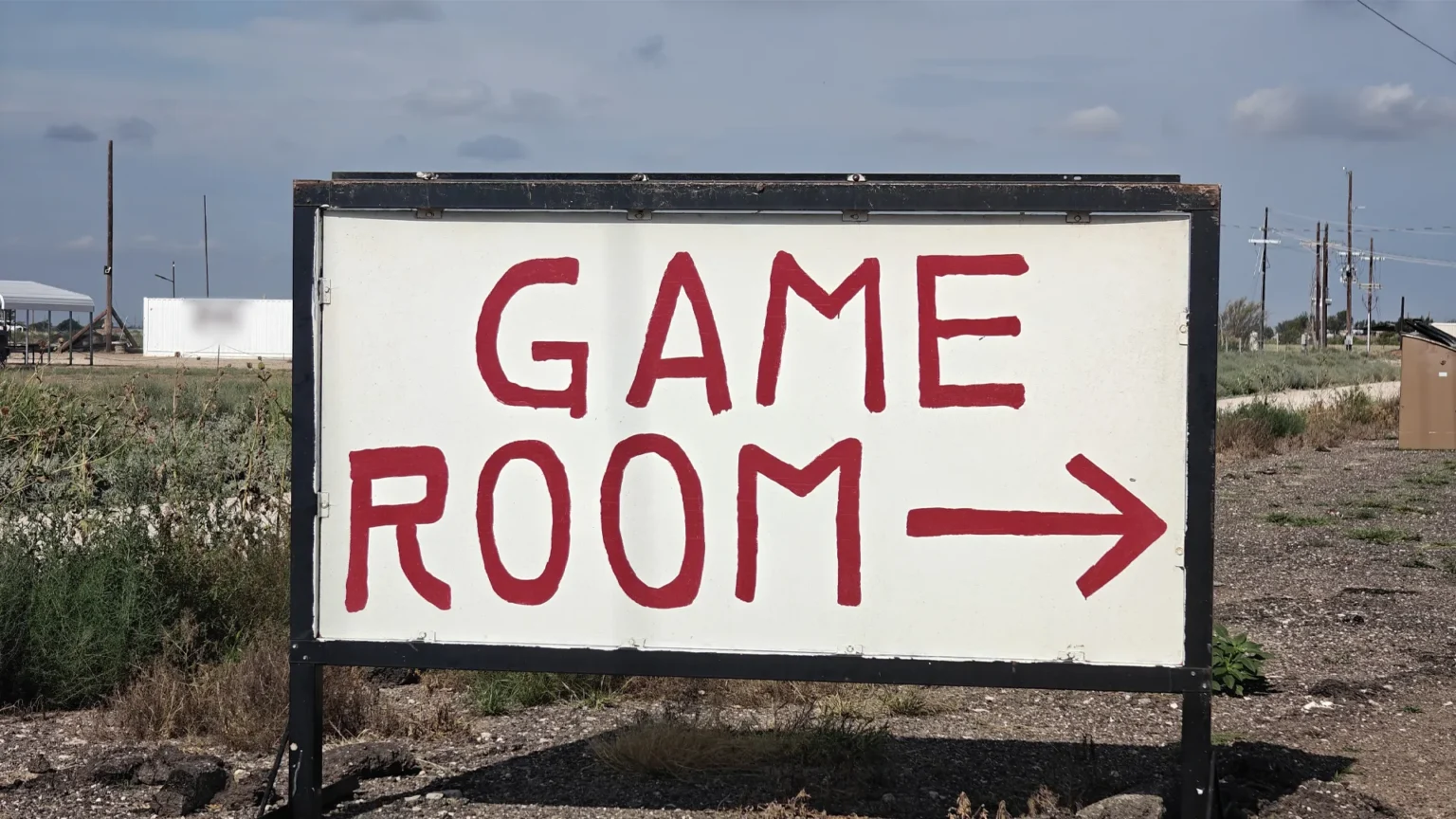
Lubbock County has tightened its regulation of game rooms, limiting operators’ ability to retain grandfathered status after ownership changes, permit revocations or extended closures.
County commissioners approved the revised ordinance on Feb. 23, 2026, building on regulations that took effect the previous year. The amendments also changed the appeals process, clarified the county tax assessor-collector’s authority over permits and initially restricted game rooms to weekday business hours.
Most of those changes remain in effect. However, a pending lawsuit prompted a court order temporarily allowing game rooms to operate from 10 a.m. to 10 p.m. seven days a week.
Grandfathering tied to one owner and location
The county’s original ordinance, effective May 1, 2025, generally allowed only one new game room for every 30,000 residents in unincorporated Lubbock County. Based on the population formula, that permitted only one new location. Businesses already operating before the ordinance could seek grandfathered status and continue at their existing locations.
Under the revised county ordinance, a grandfathered game room must remain in continuous operation under the same ownership and at the same location. Adding an owner, transferring the business or changing its ownership structure can eliminate the exemption.
A successful permit suspension or revocation also ends grandfathered status. Operators seeking a grandfathered permit must apply in person, and a business closing for more than seven days must notify the county to preserve its claim of continuous operation.
The changes effectively prevent an owner from selling a grandfathered game room along with its exemption. A new owner would have to qualify under the ordinance’s limits for new establishments, including restrictions on the number and location of game rooms.
The amendment also designates the county’s permit office, administered through the tax assessor-collector, as the final county authority on licensing decisions. Other county officials cannot override those decisions informally.
Existing requirements include criminal-background checks for owners and employees, on-site commissioned security, unannounced inspections and a 1,000-foot separation requirement for new game rooms near neighborhoods, schools, playgrounds and certain other locations. Details and permit information are available through the county’s game-room regulatory page.
Violations can carry civil penalties of as much as $10,000 per violation. The county may also seek an injunction and recover qualifying court and enforcement costs.
Citizen board replaces hearing officers
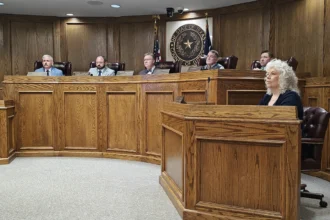
The amended ordinance created a Game Room Hearing Board to consider appeals when permits or employee licenses are denied, suspended or revoked.
The seven-member board consists of county residents appointed by the four commissioners, county judge, sheriff and tax assessor-collector. Three members hear an individual appeal. Board members cannot own, work for or represent a game room.
The board held its first hearing May 19. If it upholds a permit decision, the affected operator can appeal to state district court. The previous process used justices of the peace acting as administrative hearing officers rather than in their judicial roles.
County cites crime and illegal gambling concerns
County officials began developing the regulations after reports of shootings, robberies, assaults and suspected illegal gambling at some game rooms. Sheriff Kelly Rowe and Commissioner Jason Corley agreed the businesses were associated with criminal activity, although they differed over whether the county ordinance would provide an effective long-term solution.
Texas law gives commissioners courts authority to regulate game-room locations, density, permits and inspections to protect public health and safety. That authority is established under Chapter 234 of the Texas Local Government Code.
The county’s rules do not mean every game room is an illegal gambling operation. Under the Texas Penal Code, certain amusement devices may award noncash merchandise, toys or novelties worth no more than 10 times the cost of one play or $5, whichever is less. Cash payments and prizes exceeding that limit can place an operation outside the statutory exception.
Lawsuit changes hours—at least temporarily
Commissioners’ February amendment initially limited game rooms to 8 a.m. to 5 p.m. Monday through Friday, reducing permitted operations from 97 hours to 45 hours per week.
El Fronteriso Entertainment sued the county March 2. The company alleged that commissioners exceeded their statutory authority, failed to provide adequate public notice of the proposed hours and imposed an unconstitutional regulatory burden. The county filed a general denial and has disputed wrongdoing.
On April 24, visiting Judge Patrick Pirtle signed an agreed temporary order allowing game rooms to operate from 10 a.m. to 10 p.m. every day. The order also temporarily prevents the county from requiring businesses to post a sign stating that gambling is illegal in Texas.
Those provisions are expected to remain in place while El Fronteriso Entertainment v. Lubbock County proceeds in the 237th District Court. The remaining portions of the amended ordinance—including the narrower grandfathering rules—remain enforceable.
Permit numbers decline
The number of permitted game rooms fell from 45 in August 2025 to 23 by June 2026, according to county records reported by Lubbock Lights.
County officials reported 14 permit revocations or losses, including six 2026 cases involving businesses that failed to maintain continuous operations or provide required notice. Some operators declined to seek annual renewal, while others closed voluntarily.
The county had not imposed civil fines by June, relying instead primarily on permit denials and revocations. Three people had been charged with misdemeanors specifically connected to ordinance violations, while other cases involved alleged violations of state gambling laws.
The lawsuit leaves the ordinance’s operating-hour provisions unsettled, but its limits on transferring grandfathered businesses are already reshaping the county’s game-room industry.