

Commissioners say the results support their decision to adopt the no-new-revenue tax rate, while County Auditor Kathy Williams says one-time savings and investment earnings should not be treated as dependable annual revenue.
An outside audit showing that Lubbock County finished the 2024-25 fiscal year without drawing from its reserves has intensified a dispute between county commissioners and County Auditor Kathy Williams over how the budget was presented to the public.
When the budget was adopted in 2024, county officials projected that balancing it at the no-new-revenue property tax rate would require approximately $7.2 million from the general fund balance. Instead, the county ended the fiscal year with its unassigned fund balance—commonly described as reserves—up approximately $2.7 million.
That nearly $10 million difference between the budget projection and the year-end result has commissioners questioning the assumptions used during budget negotiations. Williams, however, says the audit does not demonstrate that the original forecast was improper because budgets are prepared before actual revenue and spending are known.
Spending and investment income drove the difference
The county’s FY2025 budget presentation said adopting the no-new-revenue rate would require approximately $7.2 million from the general fund balance. The presentation also warned that the amount would need to be restored during the following budget cycle.
The audited results were substantially better. According to figures presented to the Commissioners Court and reported by Lubbock Lights, the unassigned fund balance reached approximately $58.4 million—an increase of about $2.7 million. Unrestricted cash and investments rose by roughly $330,000 to $44.2 million.
Several factors contributed to that result. The Sheriff’s Office spent approximately $2.4 million less than budgeted, while the information technology department spent about $1.8 million less. The county also earned nearly $6 million in investment income that had not been included in the recurring-revenue forecast.
Property-tax collections were close to the auditor’s estimate. Williams said the county budgeted approximately $109.7 million and collected about $109.1 million, a difference of less than 1%.
Williams defended the decision to estimate investment earnings conservatively. Interest rates change, she said, and budgeting several million dollars of investment income as recurring revenue could lead the county to create permanent expenses—such as salaries or additional positions—that it might not be able to sustain when rates fall.
Commissioners say the result changes the debate
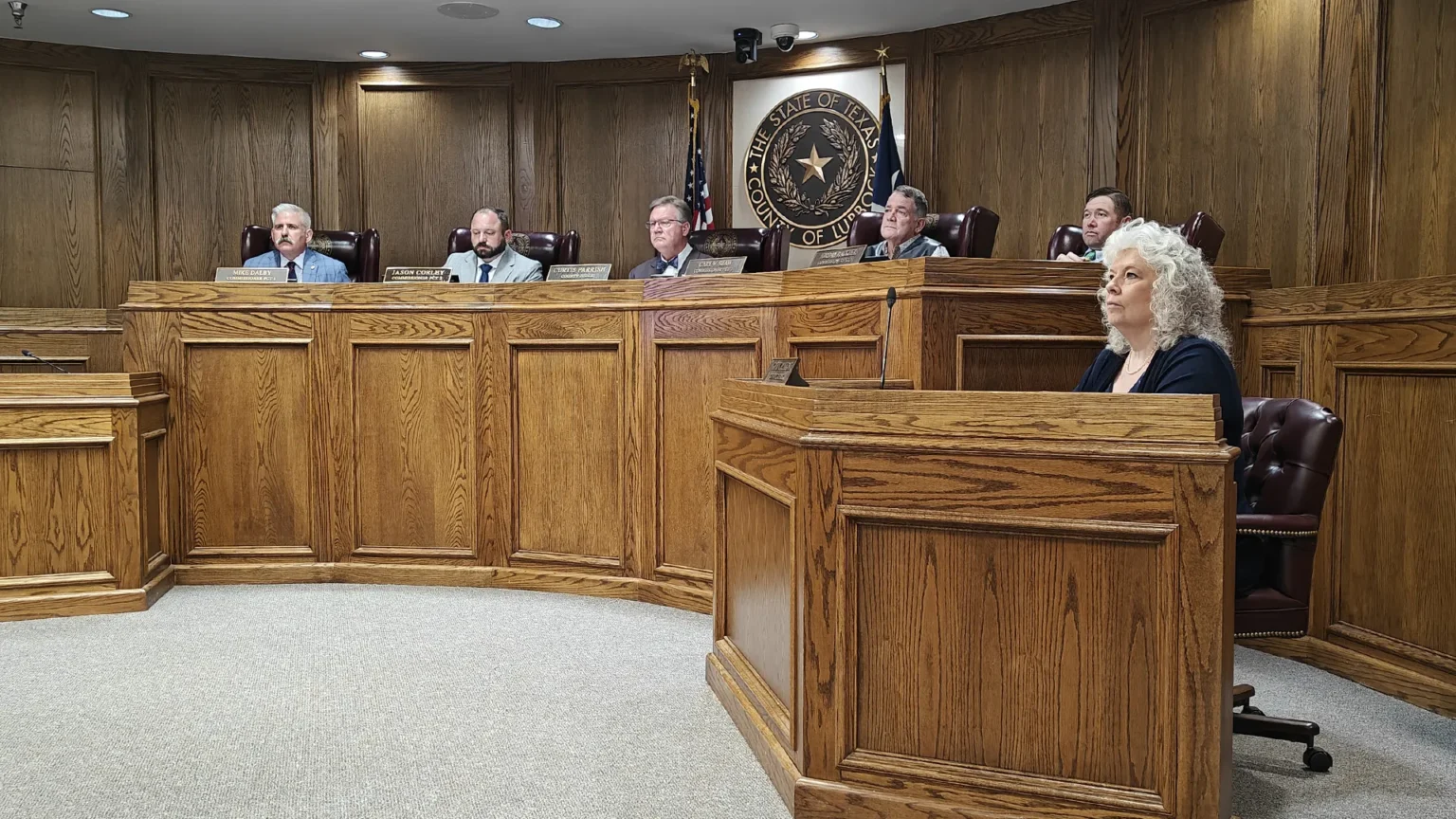
Commissioners Michael Dalby, Cary Shaw, Jordan Rackler and Jason Corley expressed varying degrees of frustration with the budget forecast.
Rackler said the results vindicated the decision he and Corley made in 2024 to miss budget and tax-rate meetings, preventing the court from establishing a quorum to adopt a higher rate. Under state law, that left the county at the no-new-revenue rate.
“The debt was down $25 million,” Rackler told KCBD during a February briefing on the draft audit. Shaw said county assets increased by nearly $34 million and property-tax revenue rose by approximately $4.8 million.
Dalby said the strong financial report was welcome but surprising. He argued that, had commissioners known the county would finish with additional reserves, they might have funded employee raises, volunteer fire departments, more road maintenance or other priorities.
Corley and Rackler said the audit demonstrates that county operations can be maintained at the no-new-revenue rate. Williams and County Judge Curtis Parrish disagree, arguing that the county still left needs unfunded, including sheriff’s deputies, employee compensation, road work and building repairs.
That distinction is important: an annual surplus shows that actual revenue exceeded actual spending, but it does not by itself establish that every requested service or capital project was adequately funded.
What the audit did—and did not—find
The outside accounting firm reported no audit findings, questioned costs or evidence of concern. Its representative described the opinion as the best report the firm could issue.
An unmodified audit opinion means the financial statements fairly present the county’s financial position under accepted accounting standards. It does not endorse one tax rate over another, determine whether deferred spending was prudent or establish that every budget forecast should have matched the final result.
Budgets are prospective documents based on estimated revenues and authorized spending. Audits examine transactions after the fiscal year has ended. Departments frequently spend less than their full appropriations, and volatile income—such as investment earnings—can vary considerably.
Lubbock County’s fund-balance policy calls for unassigned reserves equal to 25% of expenditures. The policy says those reserves provide working capital and protection against revenue fluctuations, emergencies and unexpected costs.
Tax-rate terminology adds to the disagreement
The officials also disagree about what “no-new-revenue” means in a growing county.
The Texas Comptroller explains that the rate is calculated to produce approximately the same tax revenue from properties appearing on the tax roll in both years. Because newly constructed property is not part of that same-property comparison, it can generate additional revenue even when a taxing unit adopts the no-new-revenue rate.
That helps explain how Lubbock County’s property-tax collections could increase despite the rate selected in 2024. It does not resolve the larger policy question of whether that growth provides enough money to cover higher costs and growing service demands.
The audit therefore produced two conclusions that can coexist: the county did not ultimately need the projected reserve transfer, and commissioners still must decide whether the spending they postponed represents savings or unmet needs. The increasingly personal disagreement between the court and its auditor will make that decision more difficult when the next budget is prepared.
Texas counties intentionally divide financial authority between commissioners and an independently appointed auditor. The Texas Association of County Auditors describes that structure as a system of checks and balances in which neither side controls the other. In Lubbock County, that independence is now being tested by a dispute over not only the numbers, but how much confidence elected officials should place in future forecasts.