

Property records show the federal government relinquished its interest in the historic O.W. English Home, but the release did not eliminate Bart Reagor’s restitution obligation or apply to his other assets.
The federal government released its judgment lien against Bart Reagor’s historic Lubbock home as the Texas Tech University System completed its $3.5 million purchase of the property for a chancellor’s residence.
The lien was one of several legal claims connected to Reagor and the collapse of the Reagor-Dykes Auto Group that had to be addressed in connection with the transaction.
A general warranty deed filed with Lubbock County shows Bart Reagor, acting through his wife and agent, Carla Annette Reagor, conveyed the property at 2809 19th Street to the Texas Tech University System.
The deed was executed April 15 and recorded April 16.
On April 16, the United States signed a partial release relinquishing any interest it held in the property through its federal judgment lien. The release was officially recorded with Lubbock County on April 17.
“The United States hereby releases any interest it may have by virtue of the judgment lien” in the 19th Street property, the release document stated.
Importantly, the document described the action as a partial release and said it applied to no other property or assets belonging to Reagor.
The release therefore removed the federal government’s claim against this particular home. It did not state that Reagor’s remaining restitution balance was forgiven, fully paid or otherwise extinguished.
Publicly available records also do not explain whether any portion of the home’s sale proceeds was paid to the federal government or distributed to other creditors. The Justice Department had not provided an explanation in response to requests for comment when the transaction was first reported.
Lien traced to $9.38 million restitution order
The federal lien arose from Reagor’s criminal case following the failure of his West Texas automobile dealership group.
A federal jury convicted Reagor in October 2021 of making a false statement to an FDIC-insured bank. In March 2022, U.S. District Judge Matthew Kacsmaryk sentenced him to 14 years in federal prison and ordered him to pay $9,378,817.28 in restitution, according to the U.S. Attorney’s Office for the Northern District of Texas.
Federal prosecutors subsequently placed a judgment lien against the 19th Street property as part of the government’s effort to enforce that obligation.
Reagor remains in federal custody, with a projected release date in 2033. His wife held a durable power of attorney authorizing her to handle real-estate transactions and other financial matters for him.
The deed reflects that arrangement: Carla Reagor signed for Bart Reagor as his agent and also signed in her individual capacity as his wife.
Although the government released its interest in the house, collection activity apparently continued elsewhere. Criminal-court records reviewed by Lubbock Lights showed that prosecutors asked a federal judge in April to finalize garnishments totaling more than $330,000 from accounts associated with Reagor and his wife at five companies.
Private creditors also recorded judgments
The federal lien was not the only title issue associated with the property.
County records included abstracts of judgment involving Ford Motor Credit Company, Vista Bank, International Bank of Commerce and GM Financial or AmeriCredit. The largest was connected to a roughly $49 million judgment obtained by Ford Motor Credit after litigation arising from the dealership group’s bankruptcy.
Carla Reagor’s attorney used a Texas homestead procedure to demand the release of Ford Motor Credit’s judgment lien against the residence.
In a notice sent to the company, her attorney said a homestead affidavit had been filed in November 2025 under Section 52.0012 of the Texas Property Code. The demand asserted that the 19th Street property was Carla Reagor’s homestead and should be released from the private judgment lien. Ford Motor Credit’s claim against the home was subsequently cleared in December.
Releasing a lien from a homestead does not necessarily erase the underlying judgment. It removes the creditor’s asserted claim against that particular property while leaving questions about collection from other nonexempt assets separate.
The federal lien required its own release and remained attached to the property until the government acted in April.
Texas Tech paid $3.5 million
The deed did not disclose the property’s complete purchase price, listing only $10 and other consideration, as is common in Texas real-estate filings.
Texas Tech later confirmed in response to an open-records request that the system paid $3.5 million, according to a follow-up report disclosing the price.
The Lubbock Central Appraisal District had assigned the property an estimated market and taxable value of approximately $2.26 million. A tax appraisal, however, is not necessarily the same as a professional appraisal or an agreed market price for a unique historic property.
Texas Tech’s Board of Regents unanimously authorized officials to complete negotiations for a system-owned chancellor’s residence during its Nov. 14, 2025 meeting. The official meeting minutes did not identify the property by address or disclose the price.
The system said the acquisition would initially be financed through commercial paper and could later be incorporated into a bond issuance. It said no state-appropriated money would be used to purchase the residence.
Historic home will serve two purposes
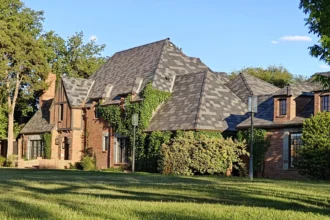
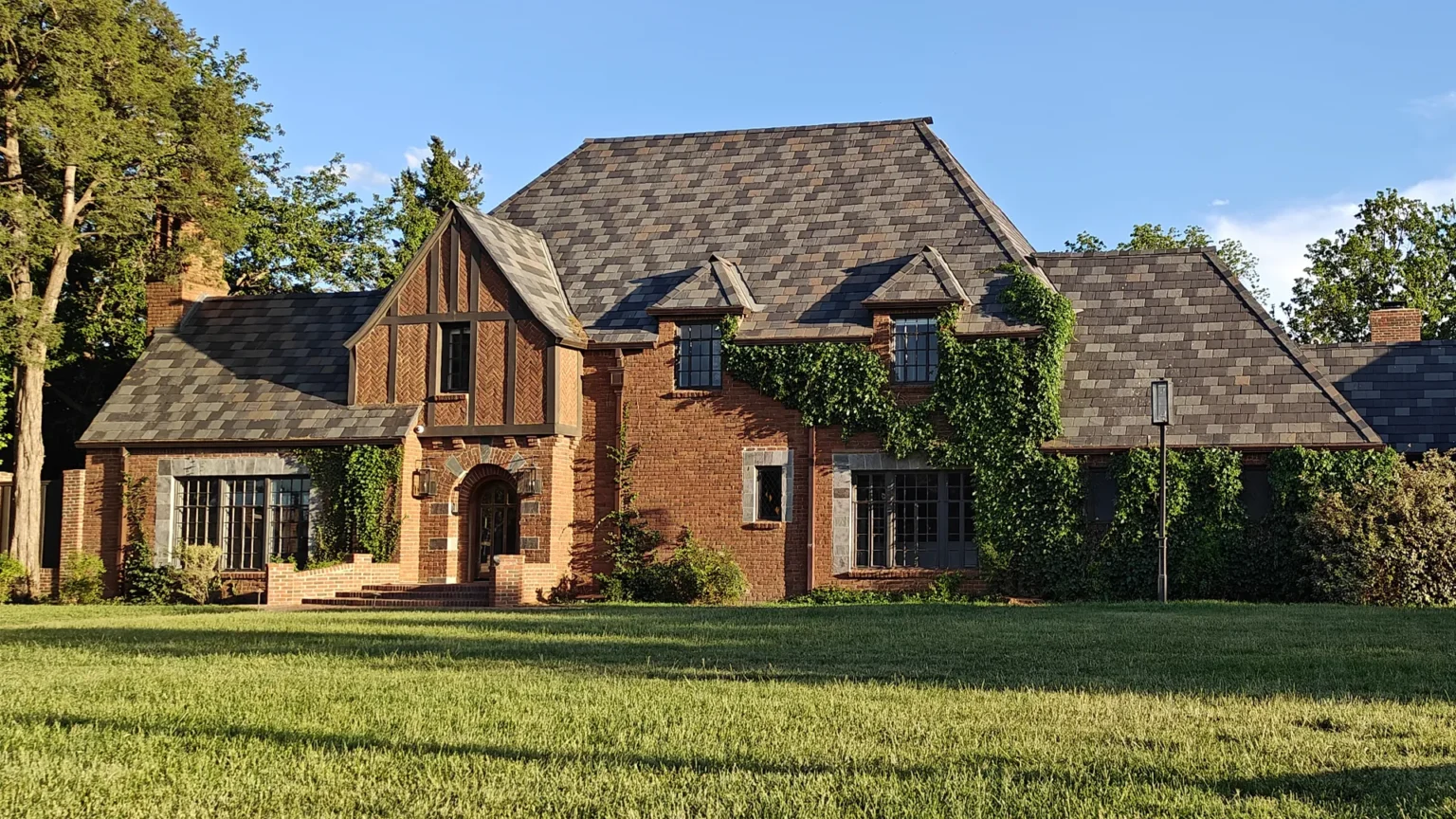
The English Home was constructed in 1938 for Lubbock surgeon O.W. English. Designed by architect and Texas Tech professor W.L. Bradshaw, the Tudor Revival residence stands on more than one acre across 19th Street from the university campus.
The property was designated a historic landmark in 1981.
In its official announcement of the acquisition, Texas Tech said the house would serve as Chancellor Brandon Creighton’s official residence and as a venue for gatherings involving donors, alumni and other university stakeholders.
The system characterized the property as a working institutional asset intended to support fundraising, recruitment and external engagement.
The lien releases made the transaction possible, but they do not answer every financial question surrounding the sale. Most notably, the public documents do not disclose how the $3.5 million purchase payment was distributed or how much, if any, was applied toward Reagor’s federal restitution obligation and other outstanding judgments.