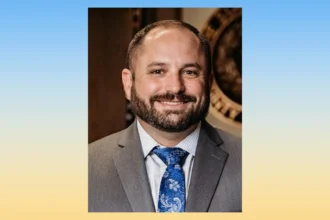


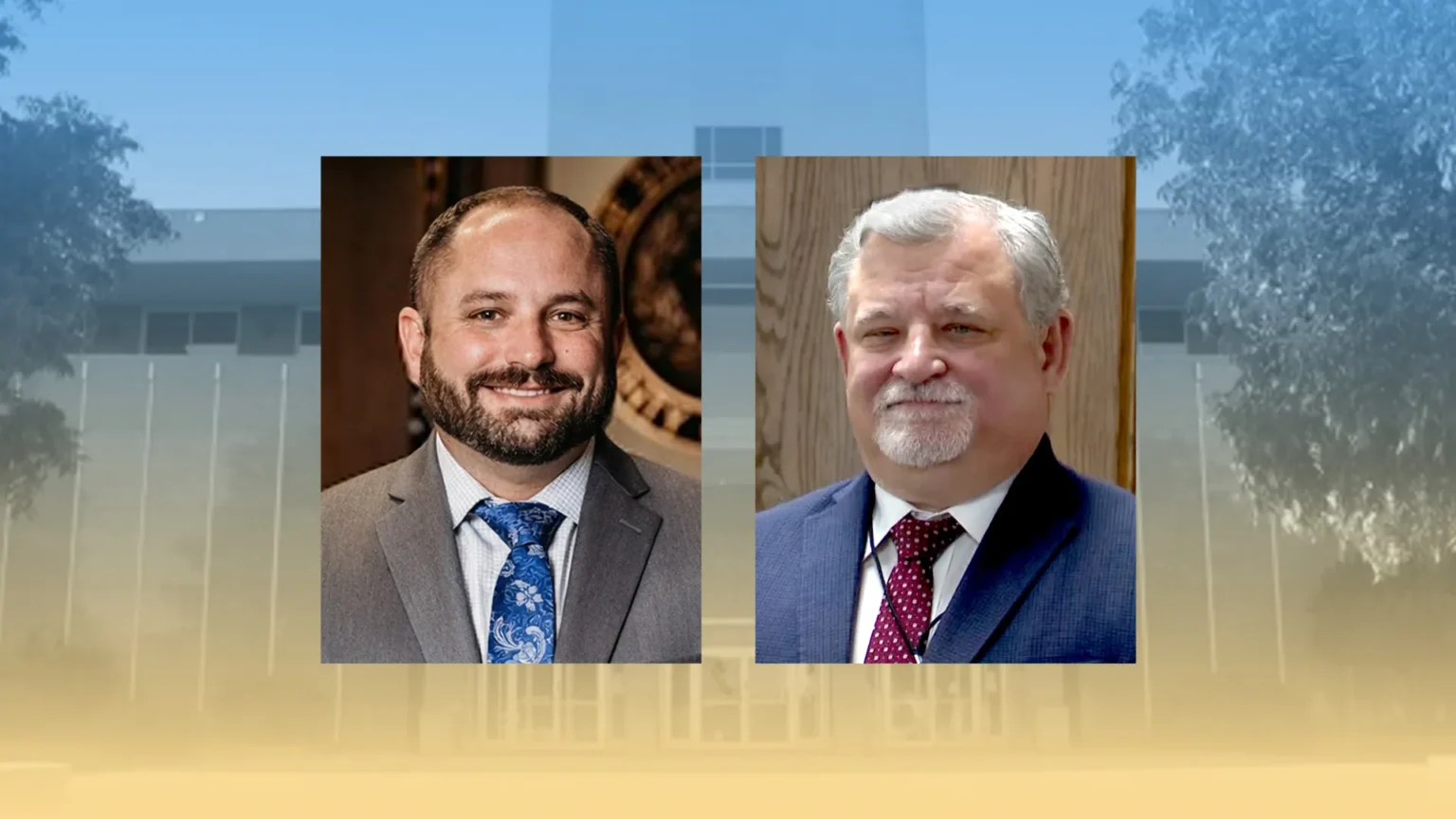
The court denied Mark Meurer’s mandamus petition and lifted its temporary stay, leaving Jason Corley in office while the underlying dispute continues.
Jason Corley remains Lubbock County’s Precinct 2 commissioner after the Texas Supreme Court declined to intervene in Mark Meurer’s effort to overturn the temporary order that restored Corley to office.
On May 1, the state’s highest civil court denied Meurer’s petition for a writ of mandamus and lifted a stay it had imposed in February. That stay had temporarily stopped proceedings in the underlying Lubbock County lawsuit while the Supreme Court considered Meurer’s request.
The brief order did not explain the justices’ reasoning. It also did not conclusively decide whether Corley triggered Texas’ resign-to-run provision or whether he is entitled to complete his term.
Instead, the ruling means the Supreme Court will not, through this mandamus proceeding, direct the Lubbock district court to withdraw the temporary order that returned Corley to the Commissioners Court.
Corley therefore remains in office for now. The separate appeal, jurisdictional questions and the underlying trial-court case still must be resolved.
How the dispute began
The controversy started after Corley explored a campaign for the 19th Congressional District seat being vacated by U.S. Rep. Jodey Arrington.
Corley announced the creation of an exploratory committee Nov. 12, 2025. His announcement used a “Corley for Congress” email address, campaign graphics and a congressional campaign mailing address.
Lubbock County Judge Curtis Parrish concluded that those actions made Corley a congressional candidate before the legally permitted date. Parrish then announced that Corley had automatically resigned and appointed Meurer to fill the purported vacancy.
Meurer was sworn in Dec. 8 and participated in one Commissioners Court meeting. Corley disputed Parrish’s interpretation and filed a lawsuit that evening.
Parrish has maintained that he did not personally remove Corley. His position is that the office became vacant automatically because of Corley’s actions.
The Texas Constitution’s resign-to-run provision applies to several elected officials, including county commissioners. If one of those officials announces a candidacy—or becomes a candidate in fact—for another office while more than one year and 30 days remain in the current term, the announcement constitutes an automatic resignation.
Corley’s commissioner term expires Dec. 31, 2026. He formally announced his congressional campaign Dec. 2, 2025, after the disputed cutoff.
The central factual issue is whether his earlier exploratory announcement and related campaign materials amounted to an actual candidacy before that date.
Corley contends that he was only evaluating a possible campaign in November. His brief concerning the resign-to-run rule argued that an exploratory committee did not constitute an announcement of candidacy and that a private text message could not qualify as a public announcement.
Parrish and Meurer’s side have argued that Corley’s words, campaign branding and other conduct showed he had already become a candidate in fact.
Those competing claims have not been conclusively resolved at a final trial.
State intervened on Corley’s side
After Corley filed suit, the State of Texas entered the case through Potter County Attorney Scott Brumley, who was appointed attorney pro tem.
The state sought relief through a quo warranto action, a legal proceeding used to determine whether someone is unlawfully holding or exercising a public office.
In its petition to intervene, the state alleged that Corley did not announce his candidacy early enough to trigger an automatic resignation. It consequently argued that no vacancy existed and that Meurer’s appointment was invalid.
Visiting Judge Patrick Pirtle entered a temporary order Dec. 19 directing Meurer to step aside and allowing Corley to resume serving as commissioner while the litigation continued.
That was an interim ruling, not a final judgment after a complete trial. Nevertheless, it determined who would occupy the seat during the case: Corley.
Meurer pursued two appellate routes
Meurer challenged the temporary ruling through both an appeal and a petition for mandamus in the Seventh Court of Appeals in Amarillo.
An appeal asks a higher court to review a lower court’s ruling. Mandamus, by contrast, is an extraordinary remedy used to require a judge or public official to perform a legal duty or correct a serious abuse of discretion when an ordinary appeal is inadequate.
Meurer’s challenges have included procedural arguments about who was legally permitted to bring the quo warranto claim, whether the state was properly substituted for Corley and whether the trial court acted after an appeal had triggered an automatic stay.
The Seventh Court declined to grant Meurer immediate emergency relief. It also questioned whether it had jurisdiction and whether the temporary written order contained the same alleged errors Meurer had identified in the judge’s earlier oral ruling, according to reporting on the appellate proceedings.
Another jurisdictional question emerged because Texas created the Fifteenth Court of Appeals to hear certain cases involving the state. The state argued that Meurer pursued his challenge in the wrong appellate court because Texas had become a party.
Meurer subsequently asked the Texas Supreme Court to intervene.
On Feb. 20, the Supreme Court temporarily stayed the Lubbock trial-court proceedings. That order paused further action in the lawsuit but did not remove Corley from office.
The court’s May 1 order denied Meurer’s mandamus petition and lifted that stay. The decision allowed proceedings to resume but did not address the substantive resign-to-run dispute in a written opinion.
What remains unresolved
The courts may still need to determine whether Corley’s November actions made him a candidate in fact, whether the state’s quo warranto intervention followed the correct procedure and which appellate court has authority over parts of the dispute.
The separate appeal of the temporary order and the underlying lawsuit also remain distinct from the mandamus petition denied by the Supreme Court.
As KCBD reported following the decision, the immediate practical result is straightforward: the high court did not order Corley’s removal.
For now, Corley continues representing Precinct 2. Whether he was always the lawful officeholder—and whether Meurer’s brief appointment was valid—remains subject to a final resolution in the continuing litigation.