

Planning officials proposed correcting zoning on nearly 1,000 parcels, but industrial zoning for a tract beside Leprino Foods prompted objections from North and East Lubbock residents.
Lubbock’s effort to update zoning across the city began with a dispute over approximately 111 acres in northeast Lubbock, where residents and an economic development organization disagreed about the property’s future.
The contested land consists of two tracts at 4501 and 4609 East Fourth Street, adjacent to the new Leprino Foods manufacturing facility. The Lubbock Economic Development Alliance sought to change the property from Low Density Single-Family zoning to General Industrial zoning.
LEDA officials said the residential designation resulted from the timing of the land’s annexation and Lubbock’s adoption of a new Unified Development Code—not from a plan to build homes there. Some nearby residents, however, argued that assigning additional industrial land to North and East Lubbock would conflict with the city’s commitments to protect established communities.
The dispute emerged during the first phase of a much larger zoning review involving hundreds of properties throughout Lubbock.
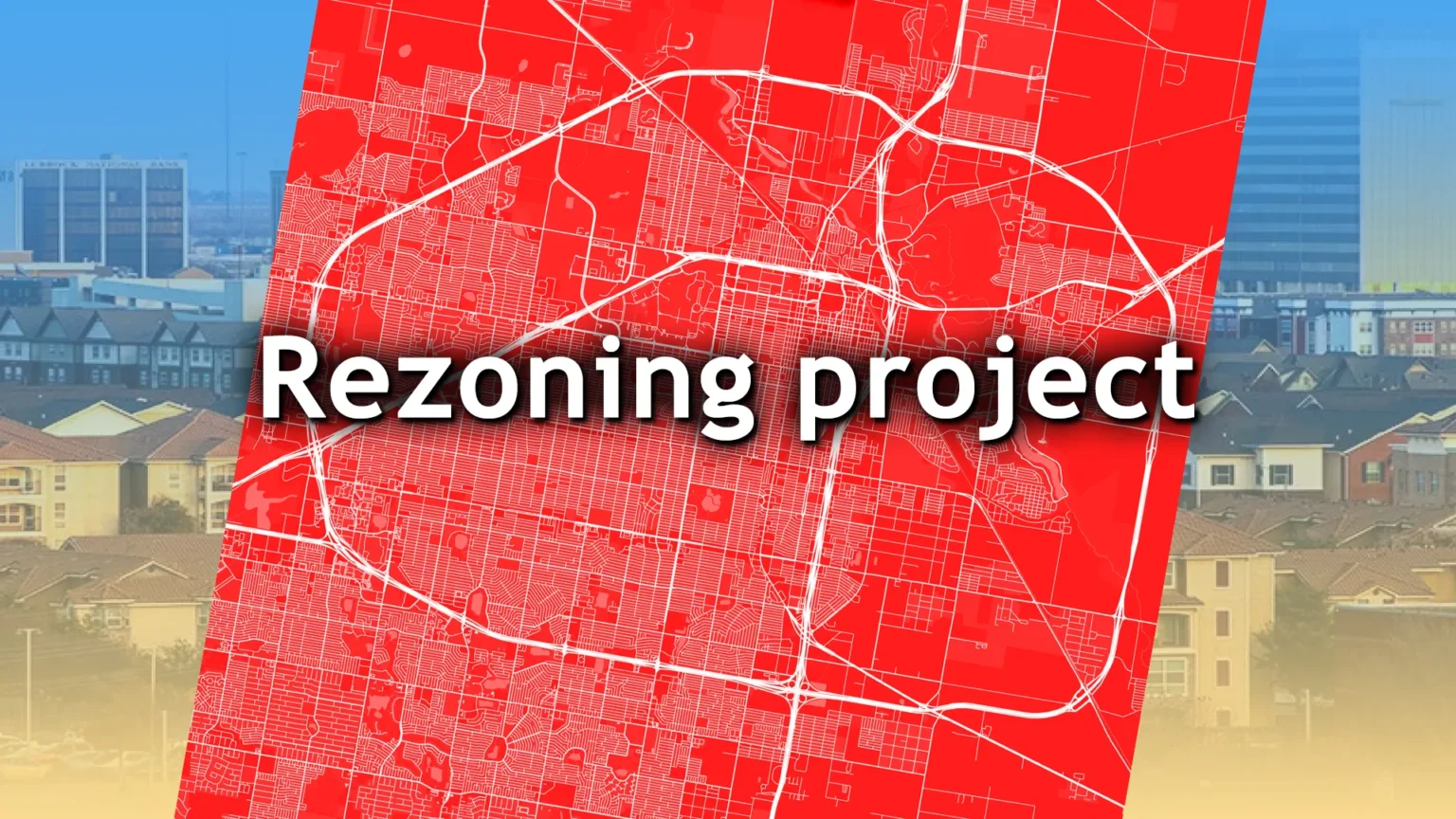
City examining nearly 1,000 zoning changes
Lubbock contracted with SAFEbuilt LLC in September 2024 to compare existing property uses with the city’s zoning map and long-range development policies. Consultants studied approximately 1,250 properties from a citywide inventory of nearly 105,000 parcels.
The review, completed in October 2025, recommended zoning changes for more than 950 properties, according to the city’s staff report for Zone Case 3540.
Most proposed changes were intended to correct technical inconsistencies, such as businesses operating legally on land still labeled residential or properties carrying zoning classifications that no longer matched surrounding development.
The initiative follows Lubbock’s adoption of Plan Lubbock 2040, the city’s comprehensive plan, and its subsequent replacement of older development regulations with the Unified Development Code.
Rather than considering all affected properties at once, city officials divided the rezoning project into six cases corresponding with Lubbock’s six City Council districts. District 1, where the disputed East Fourth Street property is located, was the first area reviewed.
LEDA says residential zoning was unintended
LEDA acquired the East Fourth Street land while it was outside Lubbock’s city limits. The property was later annexed as part of the development surrounding Leprino Foods’ cheese-manufacturing operation.
Leprino’s project represented one of the largest private investments in Lubbock’s history. The company described the plant as an approximately $870 million, 850,000-square-foot facility expected to employ about 600 people once fully operational, according to Leprino Foods’ project announcement.
Because Leprino did not require all the surrounding acreage, LEDA retained the remaining property. The annexation occurred around the time Lubbock was transitioning to its new development code, and the unused land received a default single-family residential classification.
LEDA CEO John Osborne told planning commissioners that the organization had always regarded the land as industrial property. Its proximity to Leprino Foods and the presence of oil wells made residential development unlikely, he said. A warehouse, distribution facility or another industrial employer could be a better fit.
If the city required the property to remain residential, Osborne said LEDA would attempt to find a developer capable of using it under that classification.
Residents question another industrial designation
Opponents said the zoning decision should account for residents living nearby, including people outside the city limits who might not appear in Lubbock’s official notification area.
Former City Council member Sheila Patterson-Harris, who previously helped secure the Leprino project, opposed the industrial rezoning. She argued that supporting the food-processing plant did not mean the surrounding acreage should automatically receive industrial zoning.
Dora Cortez, representing the North and East Lubbock Coalition, said publicly owned or publicly affiliated land should be considered for less-intensive zoning before development proposals reach an advanced stage.
Kathyl Anderson pointed to Plan Lubbock 2040, which calls for recognizing the history and culture of North and East Lubbock. She argued that continued industrial expansion could undermine that objective.
Their concerns reflect a broader debate in the area. Residents have repeatedly questioned whether North and East Lubbock bear a disproportionate share of industrial development and its effects while receiving fewer protections for housing and neighborhood investment.
After hearing those objections, the Planning and Zoning Commission declined to recommend General Industrial zoning for the LEDA tracts. The discussion can be viewed in the city’s January Planning and Zoning Commission meeting recording.
Public outreach drew limited participation
The city mailed hundreds of notices to property owners near the District 1 rezoning sites. Earlier outreach was less successful: a town hall and online survey reportedly received little or no participation.
Planning Director Kristen Sager said a planned news release may not have been distributed because Lubbock was responding to a cybersecurity incident that interfered with city email systems. Formal notification letters were later mailed to affected property owners.
The rezoning initiative is scheduled to continue district by district, with each case receiving a Planning and Zoning Commission hearing followed by two readings before the City Council.
Update: The Lubbock City Council considered the East Fourth Street tracts on Jan. 27, 2026, and the proposed change from single-family residential to General Industrial zoning failed, according to the city’s official meeting minutes. The broader District 1 zoning cleanup was approved separately.