

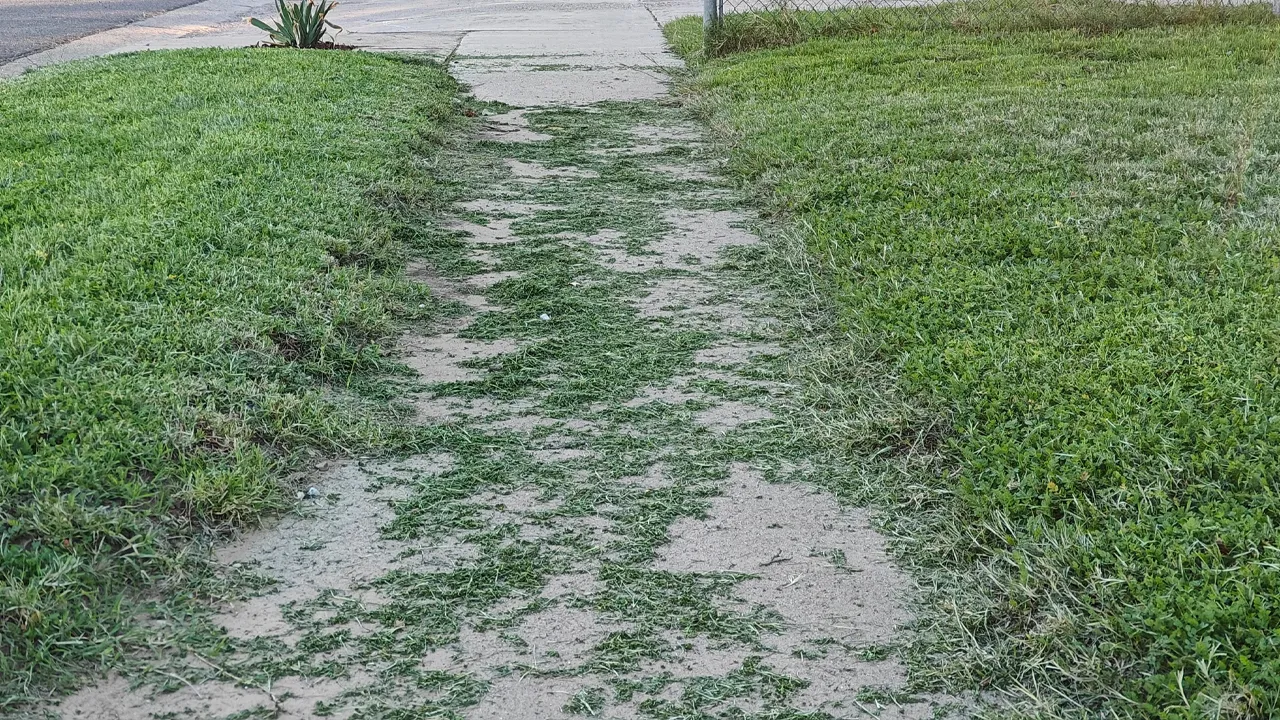
LUBBOCK, Texas — Blowing grass clippings or fallen leaves into the street may appear to be a harmless way to finish yardwork. In Lubbock, however, it violates city ordinance—and can create drainage and water-quality problems long after the lawn crew has left.
The city’s stormwater ordinance prohibits intentionally disposing of grass clippings, leaves or other vegetation in a gutter, street, sidewalk or drainage structure connected to the municipal stormwater system.
The word “intentionally” is important. Leaves that fall naturally or are carried into the street by wind generally are not treated the same as debris deliberately blown from a lawn. The ordinance targets people and landscaping crews who knowingly use the street or gutter as a disposal area.
Why yard waste in the street matters
Lubbock’s streets and gutters are part of its stormwater drainage network. Rainwater moves through that system toward storm drains, channels and playa lakes, often without receiving the kind of treatment associated with household wastewater.
Grass clippings and leaves contain nutrients such as nitrogen and phosphorus. When that organic material reaches a playa lake, it can contribute to excessive algae and aquatic-plant growth, according to the city’s Storm Water Department.
Accumulated yard waste also can obstruct gutters, storm drains and other drainage structures. The city’s floodplain guidance warns that debris in drainage systems can block culverts and channels, causing water to back up.

That can become especially noticeable during a heavy West Texas downpour. A pile of clippings or leaves that seems minor in dry weather can turn into a soggy barrier once runoff begins moving down the street.
Residents previously told Lubbock Lights that leaves and landscaping debris frequently accumulated along curbs and at street corners. One resident said blocked drainage had contributed to water reaching far up her driveway.
Why the violation can be difficult to enforce
The practice remains common partly because violations often are brief. A homeowner or landscaping crew can blow debris into the street and leave before a city inspector arrives.
A 2023 Lubbock Lights report said the city received 43 complaint calls about the issue during 2022. Stormwater officials acknowledged that enforcement can be difficult unless an inspector witnesses the activity or receives enough information to identify the responsible person or company.
Lubbock generally emphasizes education before punishment. The city’s current stormwater frequently asked questions say officials provide educational information when a person has not previously received it. Additional enforcement may follow if the violation continues.
The ordinance nevertheless provides significant enforcement authority. A violation may be punishable by a fine of as much as $2,000 for each offense, with every day that a violation continues potentially treated as a separate offense. That is the maximum authorized penalty, not necessarily the outcome of an initial complaint.
Hiring someone to maintain a yard also does not automatically remove the property owner’s responsibility. The city says property owners are responsible for discharges leaving their property and entering the stormwater system, even when a landscaping company created the discharge. If officials know which company performed the work, they may contact the contractor as well.
What residents and landscapers should do instead
The city’s stormwater-pollution prevention guidance recommends sweeping or blowing grass and other yard debris off paved areas and back onto the lawn.
Other options include:
- Directing the mower’s discharge toward the yard instead of the street.
- Using a bagging attachment when mowing near pavement.
- Mulching grass clippings and leaving them on the lawn as a natural fertilizer.
- Composting leaves and other suitable plant material.
- Bagging yard waste when it must be discarded.
The city’s landscape-waste instructions advise residents to bag leaves, grass clippings and small shrubbery before placing them in city containers. Bagging helps prevent loose material from spreading and taking up unnecessary container space.
Commercial landscapers are subject to the same stormwater requirements. The city’s commercial pollution-prevention guidance tells landscaping businesses to mow toward lawns, use baggers where appropriate and remove yard waste from streets, sidewalks and gutters.
Residents who see someone intentionally putting grass, leaves or another substance into a street, alley, storm drain or other part of the stormwater system can call the city’s Stormwater Compliance Hotline at 806-775-3118.
The basic rule is straightforward: Grass and leaves may be natural, but the street is not a yard-waste container.