

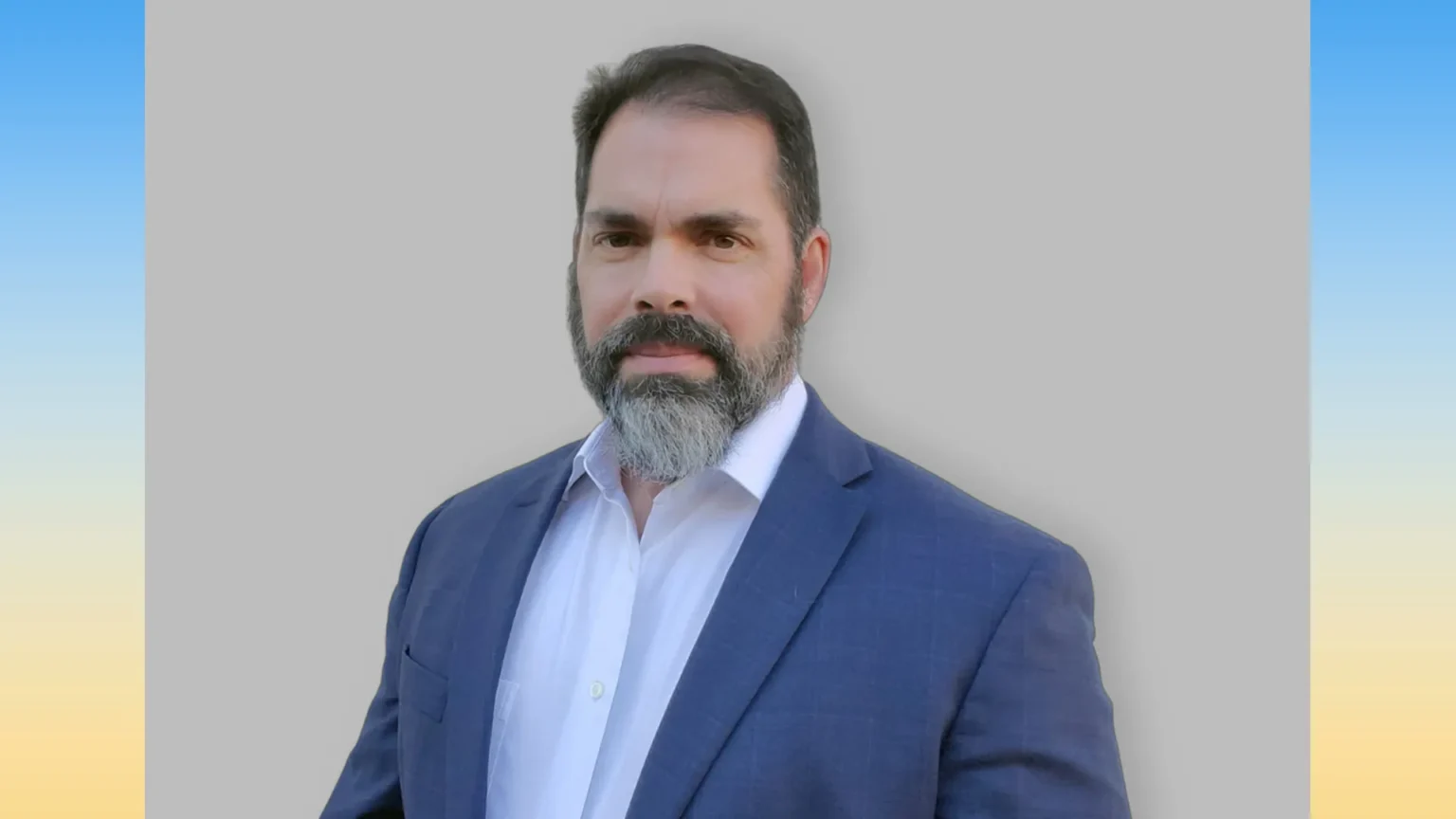
The longtime political consultant and former state official argued that Lubbock County needed more disciplined spending, stronger oversight and a commissioner prepared to examine large budgets.
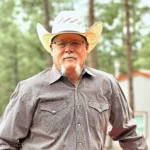
M. “Trey” Newton spent much of his career helping other officials develop policy and navigate government. He did not expect to become a candidate himself.
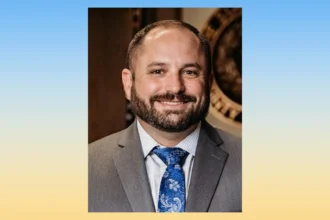
That changed in 2026, when Newton entered the Republican race for Lubbock County commissioner in Precinct 2. He presented his experience inside Texas government as the principal difference between himself and his opponents, Kevin Pounds and Justin Martin.
Newton’s campaign focused heavily on county spending and property-tax collections. He argued that Lubbock County needed a commissioner capable of examining departmental budgets, measuring performance and distinguishing core public services from spending that could be reduced or postponed.
The position was particularly significant because budget development is one of the Commissioners Court’s most important responsibilities. Commissioners adopt the county’s budget and tax rate, approve contracts, issue bonds and allocate money for law enforcement, courts, emergency services, roads and public buildings. Those duties are outlined on the county’s official Precinct 2 page.
Career spent working inside Texas government
Newton’s campaign biography described a long career in state government and political consulting.
He previously served as chief clerk of the Texas House Energy Resources Committee and as chief of staff to a chairman of the Texas Railroad Commission, the state agency that regulates oil and gas production.
Newton also worked as a special assistant and chief of staff at the Texas Comptroller’s Office. His campaign credited him with helping implement government-efficiency and modernization efforts, including the e-Texas initiative and school performance reviews intended to identify waste and recommend savings.
He later served as deputy land commissioner at the Texas General Land Office. Newton said that role gave him experience working with a budget of approximately $1.4 billion—considerably larger than Lubbock County’s general fund. These career details and his policy priorities are summarized on Newton’s campaign website.
Newton and his wife attended Texas Tech University, and their family later returned to Lubbock. Their oldest son earned a master’s degree in physics from the university, while their younger son attended Texas Tech before enlisting in the U.S. Army.
Although Newton’s professional life remained closely connected to government and elections, he said he had expected to remain behind the scenes. His campaign for commissioner marked a transition from advising and managing policy to personally asking voters for responsibility over county decisions.
Tax collections became his central argument
Newton portrayed himself as a prospective taxpayer watchdog.
His campaign calculated that Lubbock County property-tax collections had increased 89% since 2015 while the county’s population had grown approximately 9%. He used that comparison to argue that tax collections were increasing much faster than the number of residents receiving county services.
The figures were presented by Newton’s campaign rather than an independent analysis. Comparing tax collections with population growth alone does not account for inflation, new construction, changes in property values or growing demand for more expensive public services. Still, the comparison illustrated the issue Newton wanted voters to consider: whether county spending had expanded beyond what population growth justified.
Newton pledged to oppose new tax increases, require transparency and examine performance before supporting additional spending. He also argued that a flat or lower tax rate did not necessarily protect homeowners when rising property appraisals could still increase individual bills.
His plan called for reviewing departments and major programs for efficiency instead of making identical percentage cuts across the government. At the same time, he identified law enforcement, detention operations, courts, emergency services and basic infrastructure as county responsibilities that required reliable funding.
In his Precinct 2 candidate questionnaire, Newton said he would prioritize core services while using performance reviews and long-term planning to prevent costly emergencies or deferred maintenance.
More scrutiny for major projects
Newton also called for stronger financial safeguards on large county projects, particularly the proposed Lubbock County Expo Center.
He did not reject the idea of a multipurpose event venue. Instead, he questioned whether the county had received sufficient financial information before authorizing additional work.
Newton said he would have required an itemized public budget, an independent financial review and enforceable benchmarks before approving further six-figure design expenses or other commitments. He also wanted evidence that private fundraising and projected revenue could cover future costs without taking money from core county services.
That position placed Newton closer to County Judge Curtis Parrish’s concerns about the project’s transparency. Parrish opposed a January 2026 resolution authorizing $375,000 for a redesigned Expo Center proposal, while a majority of commissioners voted to advance it. KCBD reported that the revised concept reduced the project’s estimated cost from $97 million to $67 million.
Newton’s approach reflected his broader campaign argument: projects should not proceed on enthusiasm alone, even when their general purpose had public support. Commissioners needed clear financial limits, reliable revenue projections and protections for taxpayers.
Court conflict also drew criticism
Budgeting was Newton’s main focus, but he also criticized the repeated personal and political disputes involving Commissioners Court members.
When asked to grade the court, Newton declined to give it a traditional letter. Instead, he said the court needed a period of “detention” to refocus on professional conduct, cooperation and ordinary county responsibilities.
His answer referred to public disagreements over taxes, employee compensation, public-safety funding and control of the Precinct 2 seat. Newton argued that those conflicts distracted officials from roads, budgeting and service delivery.
Campaign advanced to runoff but ended there
Pounds led the March 3 Republican primary with more than 39% of the vote. Newton narrowly captured the second runoff position, finishing approximately 120 votes ahead of Martin, according to KTTZ’s primary report.
The May 26 runoff produced a clearer result. Pounds received about 60% of the vote and defeated Newton, ending Newton’s first campaign for public office. KCBD’s election coverage reported that Pounds would become Precinct 2’s next representative after Commissioner Jason Corley’s term concludes.
Although Newton did not win, his campaign forced budget oversight to the center of the race. His case to voters was that experience managing government finances could help the county control taxes, protect essential services and avoid committing public money before the full cost was understood.