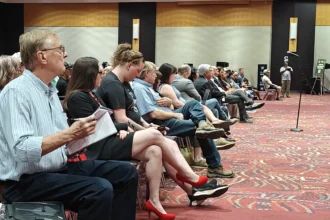


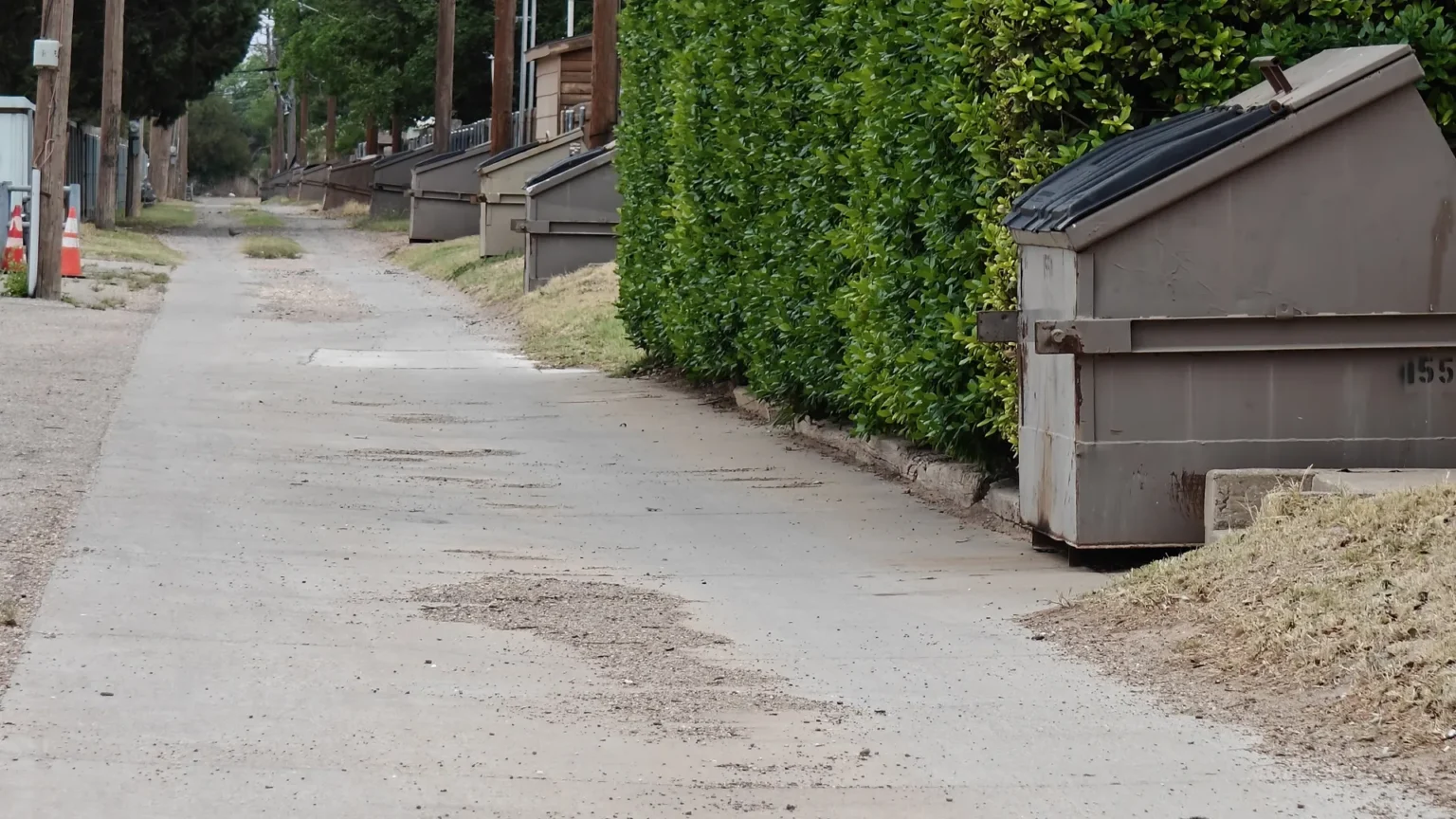
The proposal would have allowed neighbors to petition the city to pave an unpaved alley, but every adjoining property owner could have been charged—even those who opposed the project.
Lubbock homeowners will not be able to use a proposed city-run petition process to have their alleys paved after the City Council rejected the plan during its final vote.
The council initially supported the proposal unanimously on April 28. It would have created a formal system through which residents could ask the city to design, bid and oversee an alley-paving project. Most of the cost would have been assessed against the properties adjoining the alley.
However, the ordinance never became law. The council postponed its second-reading vote May 12 and then rejected the measure 6–1 on June 9, according to KCBD’s report on the final decision.
That means Lubbock residents cannot currently use the proposed petition-and-assessment program. Homeowners interested in paving an alley may still contact the city’s Engineering Department about the existing process, which generally requires residents to organize the project, hire professionals and arrange the financing themselves.
What the proposed program would have done
Many older Lubbock neighborhoods have unpaved alleys. The city’s proposal was intended to make paving those alleys more manageable by putting municipal engineers in charge of feasibility work, design and construction contracting.
Under the city’s official summary of the proposal, residents would have started the process by filing a petition and paying a $500 application fee. The requested project would have needed to cover at least one full street block.
A successful petition would have required signatures from at least two-thirds of the property owners adjoining the alley. Those supporting owners also would have needed to represent at least 51% of the alley’s total property frontage.
Meeting those thresholds would not have guaranteed construction. The city’s Engineering Department would first have examined drainage, utilities, surveying requirements and other conditions to determine whether paving the alley was feasible.
If engineers approved the project, the city would have prepared an initial design and cost estimate. Each adjoining property’s assessment would have been calculated according to the amount of alley frontage connected to that property.
Estimated bills reached four figures
Assistant City Manager Erik Rejino presented two examples during the council’s April discussion.
One hypothetical project had an estimated total cost of approximately $71,000, translating to about $3,700 for each property if every lot had equal frontage. A second example cost more than $100,000 and produced an estimated assessment of approximately $8,400 per lot.
Actual bills would have varied according to the alley’s length, drainage problems, utility work and the amount of frontage attached to each property, as detailed in the original reporting on the proposal.
The initial proposal assumed that property owners would pay the entire construction cost. City officials later determined that state law limited assessments against adjoining property owners to 90% of the project’s total cost, leaving the city responsible for the remaining 10%.
Lubbock’s existing alley-paving code likewise says that when paving is constructed by or at the city’s direction, as much as 90% of the cost—including engineering expenses—may be assessed against the adjoining properties.
That discovery created an additional concern for council members because popular use of the program could have required unplanned city spending.
Opposing homeowners still could have been charged
One of the proposal’s most controversial provisions was its all-or-nothing structure.
The city would not have paved only part of an alley. Once a petition satisfied both signature requirements and the project received engineering approval, every adjoining property owner would have been assessed a share of the cost.
That included homeowners who did not sign the petition, opposed paving or did not use the alley for vehicle access.
Mayor Mark McBrayer later said he was reluctant to support a system that could force residents to assume the cost of an improvement they did not want. He also questioned the financial benefit to the city, which would have been responsible for part of every approved project.
Supporters argued that paved alleys could improve drainage and access while reducing grading and maintenance needs. Better surfaces could also reduce wear on city garbage trucks traveling through alleys.
Payment plans and property liens
Before construction could begin, the city would have required the collection of at least 30% of the estimated project cost.
Homeowners could have paid their individual assessments in a lump sum or entered a payment arrangement lasting no more than 12 months. An unpaid or financed assessment could have resulted in a lien against the property.
If the final construction cost exceeded the estimate by more than 5%, the city could have billed homeowners for the additional amount. If the completed project cost at least 5% less than estimated, property owners would have received proportional refunds.
Residents also would have had an opportunity to stop the project after receiving the estimate. A withdrawal petition would have needed support from more than one-third of adjoining owners or owners representing at least half of the alley frontage.
Once completed and formally accepted, the new pavement would have become city property. The city would then have assumed responsibility for maintaining the primary paved section and requiring utility contractors to restore areas they damaged.
For now, those provisions remain only elements of a rejected proposal. The City Council could consider a different alley-paving program later, but residents seeking improvements must proceed under Lubbock’s existing rules.