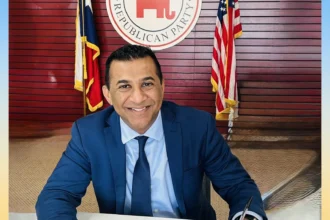


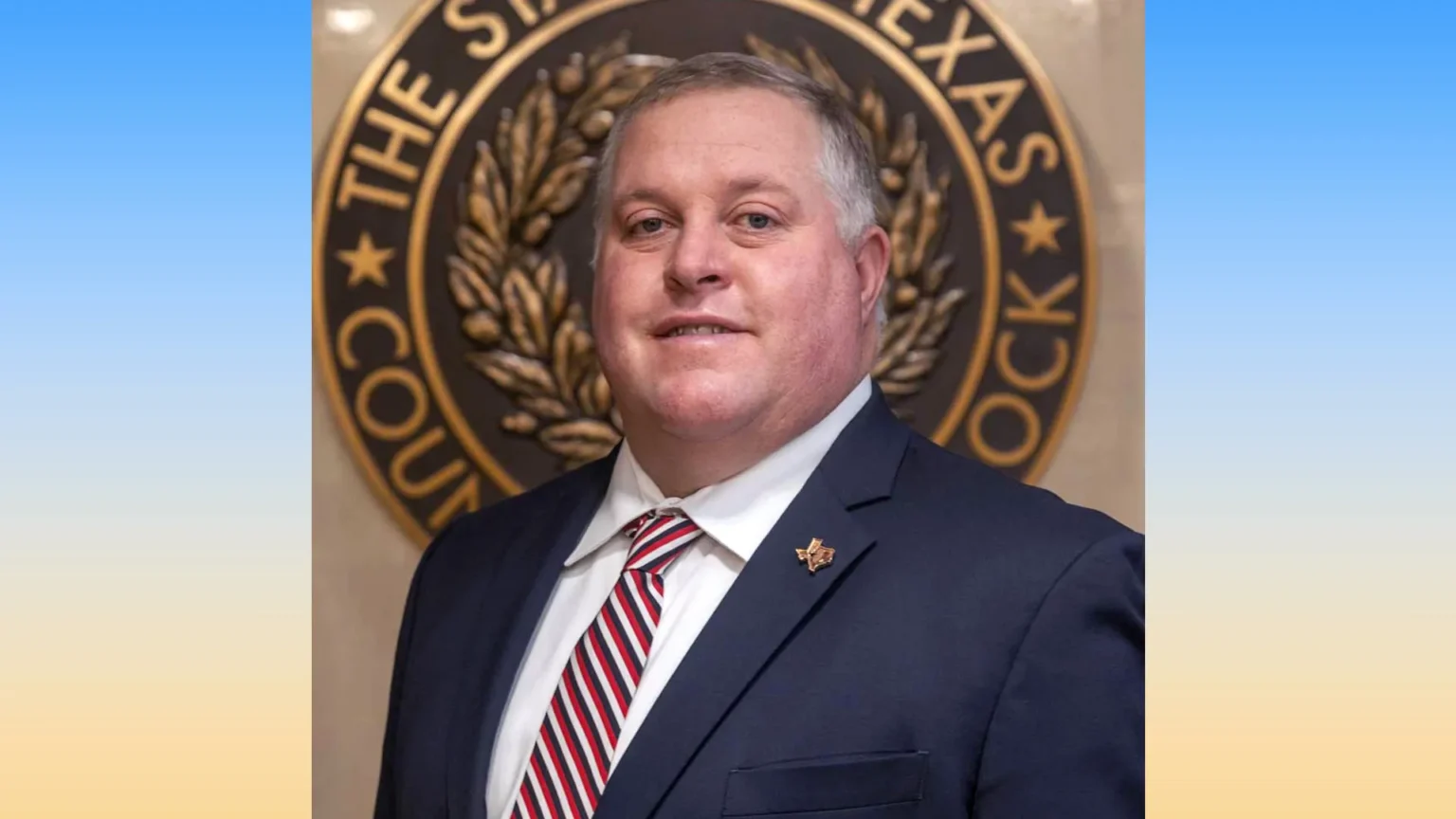
The former Lubbock County commissioner argued that law enforcement and fire protection required reliable funding, even as county leaders worked to control taxes.
Chad Seay entered the 2026 Republican race for Lubbock County commissioner hoping to reclaim the Precinct 4 seat he once held, presenting himself as an experienced fiscal conservative determined to protect essential public-safety services.
Seay said what he viewed as recent reductions affecting public safety helped persuade him to run again. His campaign emphasized adequate support for law enforcement and fire departments while also calling for lower taxes and practical solutions to county problems.
It was a return to familiar territory. Seay was elected in 2018 and served on the Lubbock County Commissioners Court from January 2019 through December 2022, representing a precinct that includes much of northwestern Lubbock County. He lost the 2022 Republican primary to Jordan Rackler by fewer than 100 votes, according to KCBD’s report marking the conclusion of Seay’s term.
Rackler subsequently ran without a Democratic opponent in the general election and succeeded Seay in January 2023.
When Seay announced his comeback campaign in October 2025, he did so in the Commissioners Court courtroom, where he had previously participated in decisions involving county taxes, employee compensation, road maintenance and public-safety spending. He said his objective was to reduce the burden on taxpayers without leaving law enforcement officers and firefighters short of the resources they needed, according to KCBD’s coverage of his announcement.
That balance—holding down taxes while paying for essential services—became one of the campaign’s central questions.
The Commissioners Court adopts the county budget and property-tax rate. It also oversees county facilities, approves contracts and makes funding decisions affecting the sheriff’s office, jail, courts, roads and other county operations. Those responsibilities give commissioners significant influence over both the tax bill residents receive and the services the county can provide. The Lubbock County government’s description of the court outlines the broad financial and administrative authority attached to the position.
For Seay, fiscal restraint was not a new campaign theme. During his previous term, he declined a $2,400 increase in commissioners’ pay, reducing his 2021 salary from $83,780 to $81,340 through an affidavit. He said at the time that he had accepted the office knowing what it paid and did not believe he should receive the increase.
Seay also reported donating portions of his salary during each of his first three years in office: approximately $14,200 in 2019, $9,700 in 2020 and $14,000 in 2021. Those actions reflected his argument that commissioner compensation was too high and should be evaluated more closely, as detailed in KCBD’s report on commissioners returning or donating pay.
His public-safety position similarly drew on his earlier service. Commissioners regularly approve agreements and funding arrangements involving rural volunteer fire departments, which provide emergency coverage across areas outside Lubbock’s city limits. Official minutes from October 2020, for example, show Seay supporting an interlocal agreement between the county and the Roosevelt Volunteer Fire Department. The action is recorded in the county’s Commissioners Court minutes.
Seay’s 2026 campaign did not argue that every county department should be insulated from budget scrutiny. Instead, he maintained that public safety should be treated as a fundamental obligation and protected when commissioners decided where to reduce spending.
The race also carried an element of unfinished political business. Rackler had taken the seat from Seay in a remarkably close primary four years earlier. Their rematch gave Precinct 4 voters an opportunity to compare the incumbent’s record with the former commissioner’s call for a change in priorities.
Former Precinct 4 Constable C.J. Peterson joined Seay and Rackler in the March Republican primary, creating a three-candidate contest. No candidate secured the nomination outright, sending Rackler and Seay to a runoff.
Seay’s bid ultimately ended in that May 26 runoff. Rackler won approximately two-thirds of the vote and secured another term because no Democrat had filed for the office, according to KCBD’s election report.
Although voters chose to retain the incumbent, Seay’s campaign placed a persistent county challenge at the center of the race: how to restrain taxes and other government costs without undermining the law enforcement and fire-protection services residents expect the county to provide.