

The Lubbock County judge emphasized his legal experience, infrastructure investments and public-safety priorities while acknowledging unfinished work and divisions on Commissioners Court.
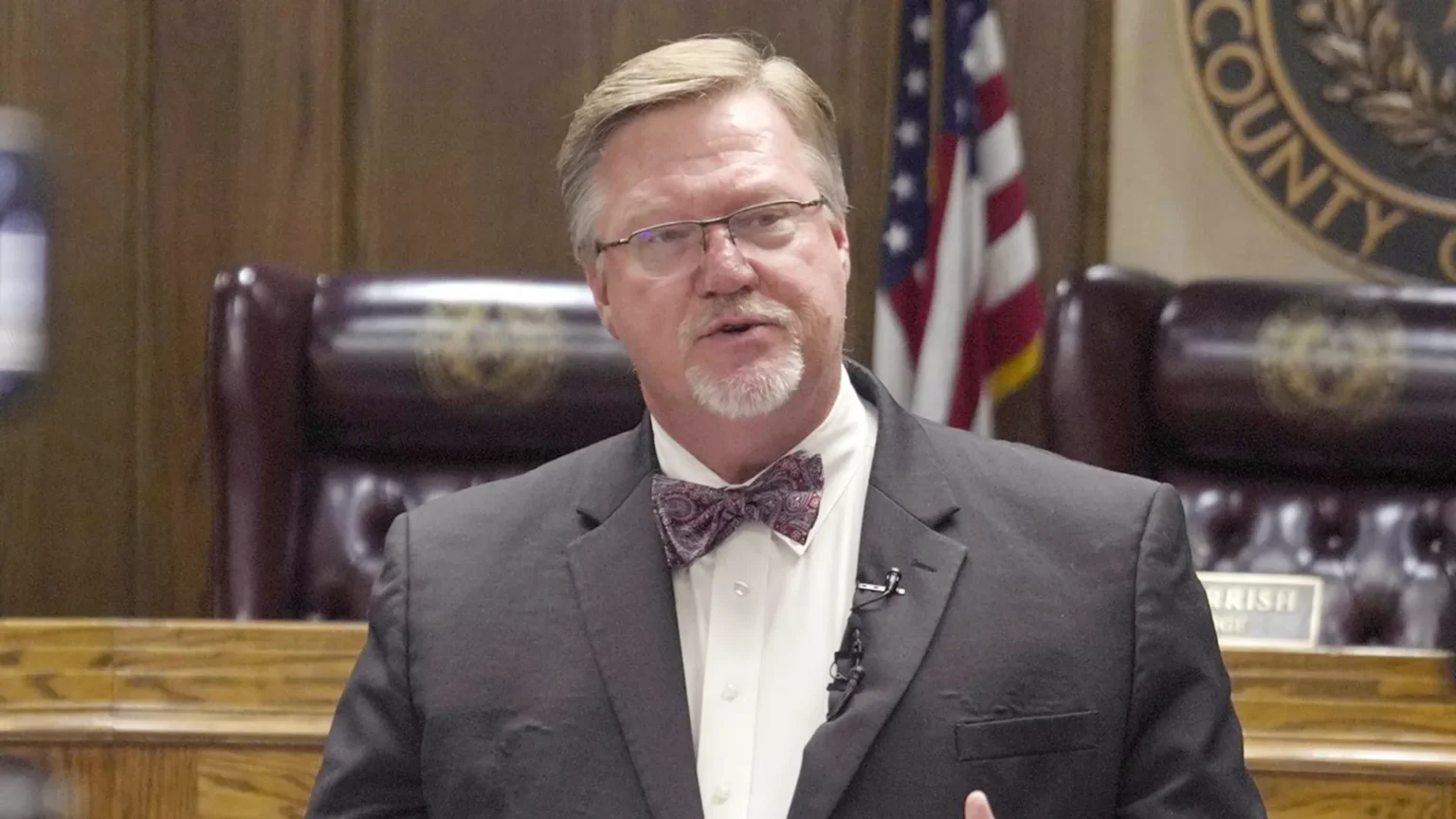
Curtis Parrish based his 2026 reelection campaign on a straightforward argument: Lubbock County had made significant progress during his first two terms, but continued population growth would require experienced leadership for another four years.
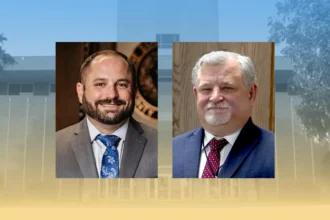
Parrish, who became county judge in January 2019, sought a third term against Wolfforth City Council member Wesley “Wes” Houck in the March 3 Republican primary. With no Democrat filing for the position, the primary was expected to determine who would hold the office after the November general election.
During the campaign, Parrish emphasized his combination of legal, legislative, administrative and communications experience. He described himself as a fifth-generation West Texan with longstanding ties to Lubbock and the surrounding region.
Parrish attended Lubbock Christian University before graduating magna cum laude from Texas Tech University with a bachelor’s degree in political science. He later earned his law degree from the Texas Tech University School of Law and became licensed to practice in Texas.
Before entering the legal profession, Parrish spent approximately 16 years in Lubbock television news, working as a photographer, chief photographer and assistant news director. He later worked for then-state Sen. Robert Duncan as a legislative aide and served as a committee clerk in the Texas House of Representatives.
Parrish practiced probate and guardianship law before winning election as county judge in 2018. His biography from the National Association of Counties also lists service with organizations including the Salvation Army, Civic Lubbock and the Lubbock United Neighborhood Association.
That legal background became a central part of his case for reelection. Although the county judge presides over Commissioners Court and is often viewed as the county’s chief executive, the position also includes significant judicial responsibilities. According to Lubbock County’s description of the office, the judge handles probate, guardianship and mental-health matters in addition to serving on county boards and performing emergency-management duties.
Parrish estimated during the campaign that judicial work accounted for more than 65% of his responsibilities. He argued that experience with probate and guardianship was therefore essential—not merely an added qualification.
He identified changes to the county’s guardianship program as one of his most important accomplishments. Parrish said the program was badly disorganized when he entered office but had since been improved through new procedures and personnel.
Guardianship cases involve people who cannot independently make certain personal or financial decisions because of age, illness or disability. As Texas Health and Human Services explains, a court may appoint another person or organization to make some decisions for an incapacitated individual. Such proceedings can involve substantial restrictions on a person’s legal rights, making oversight and judicial experience especially important.
Parrish also highlighted several major county and regional projects. Among them was a new regional medical examiner’s complex, financed partly through bonds approved by voters in 2023. County financial records show that Lubbock County issued more than $35 million in general-obligation bonds for construction and equipment associated with the facility.
During the campaign, Parrish described the medical examiner’s project as part of a broader effort to strengthen public safety and regional services. He also cited construction of a new Texas Anti-Gang Center facility, work involving Loop 88 and Woodrow Road, and support for the county Sheriff’s Office.
Economic development formed another part of his record. Parrish said he participated in regional efforts that helped attract Leprino Foods’ large dairy-processing plant to Lubbock and supported the creation of a state veterans cemetery serving West Texas.
Looking ahead, Parrish organized his priorities around three areas: public safety, roads and infrastructure, and the court system. In a KCBD campaign interview, he said those services would need continued investment as Lubbock County’s population increases.
The campaign was also shaped by disagreements over taxes, spending and relationships among commissioners. Houck accused county leaders of operating without a sufficiently clear long-term plan and criticized what he characterized as discord on Commissioners Court.
Parrish acknowledged that the court had become contentious but attributed some of the conflict to competing demands. Several commissioners favored adopting the no-new-revenue tax rate while also advocating spending on employees, infrastructure and other services. Parrish argued that reducing revenue and expanding spending could not be sustained simultaneously.
In a comparison of the candidates’ positions, both men agreed that aging facilities, infrastructure, taxes and public trust were important issues. Their disagreement centered on whether the county’s existing leadership had adequately planned for those challenges.
Parrish’s message was that the county had produced visible results but could not treat those accomplishments as a stopping point. Continued growth would place new demands on roads, courts, law enforcement, the jail and other facilities. His campaign presented a third term as an opportunity to complete projects already underway while preparing those systems for the next generation of residents.
Election update: Parrish defeated Houck in the March 3, 2026, Republican primary, securing the party’s nomination for another term. No Democratic candidate filed for the office.