


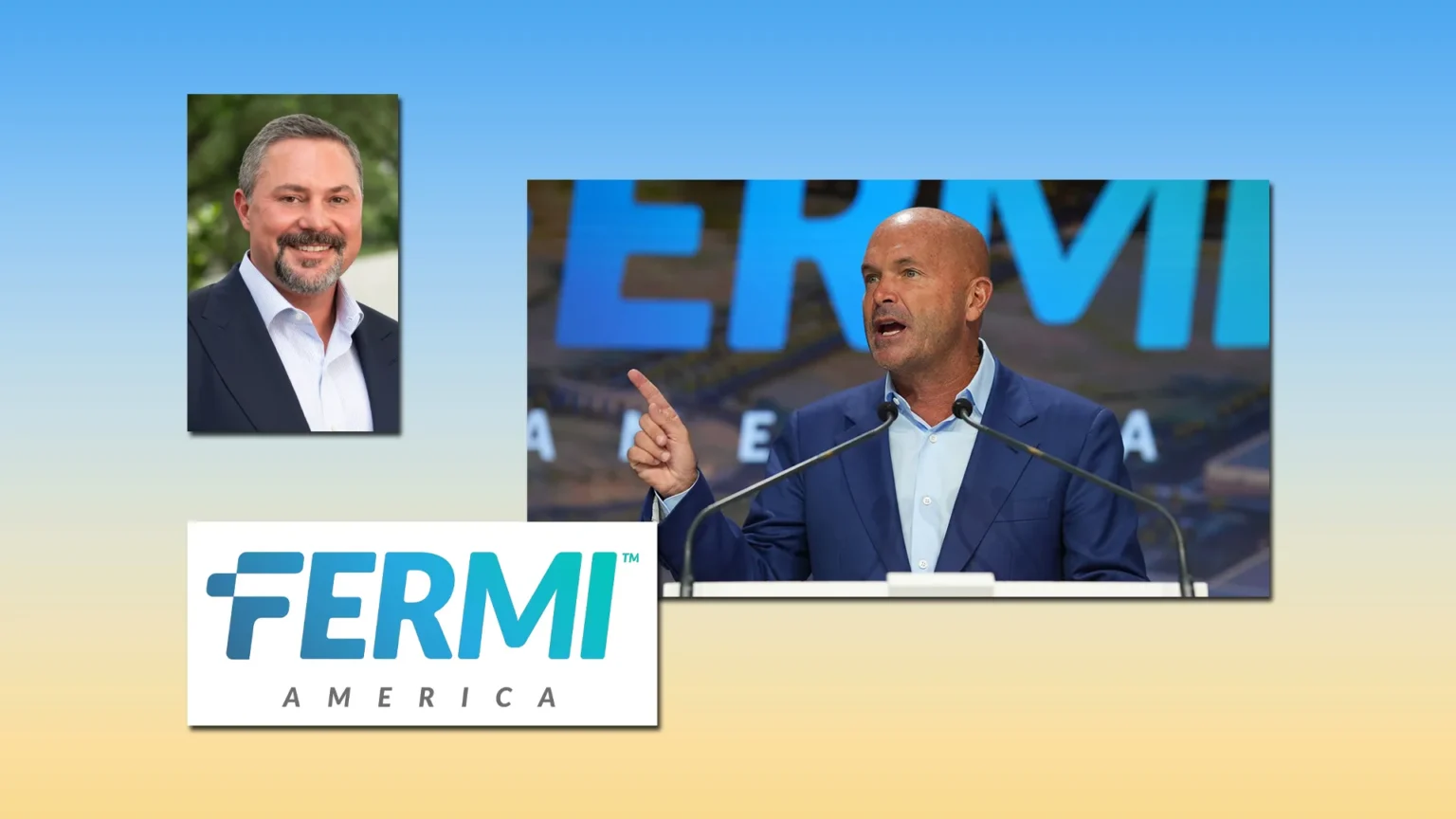
Company filings confirm that the Texas Tech University System demanded Neugebauer’s removal from executive positions, but they do not establish his claim that Campbell personally directed the decision.
A fight for control of Fermi America has drawn Texas Tech University System Board of Regents Chairman Cody Campbell into an increasingly bitter dispute between the company and its ousted co-founder and chief executive, Toby Neugebauer.
Neugebauer alleged in a June open letter to Fermi shareholders that Campbell was “critical to my ouster” and used his influence at Texas Tech to push for Neugebauer’s removal. The accusation came as Neugebauer sought shareholder support to replace directors and begin a process that could lead to the sale of Fermi.
Fermi’s own regulatory filings confirm that the Texas Tech system demanded action against Neugebauer. However, the documents do not say Campbell personally initiated or directed that demand. That portion of the account remains Neugebauer’s allegation, and no court has made a finding that Campbell improperly caused his removal.
Campbell has overlapping connections to the dispute. He is the chairman of the Texas Tech University System Board of Regents, while Texas Tech is the landlord for the core portion of Fermi’s Project Matador development. Campbell is also a co-founder and co-chief executive of Double Eagle Energy, whose other co-CEO, John Sellers, was proposed by Neugebauer as a possible new leader for Fermi.
Neugebauer made that proposal without first discussing it with Sellers or Double Eagle. The company subsequently issued a public response saying neither Sellers nor Double Eagle had any interest in pursuing the proposal.
Texas Tech’s demand confirmed in filing
The dispute followed reports about a March confrontation between Neugebauer and U.S. Commerce Secretary Howard Lutnick at an Nvidia conference in California. News reports described Neugebauer as loud and belligerent and said security personnel intervened. Neugebauer disputed that characterization, describing the exchange as a direct conversation rather than a heated confrontation.
Fermi said its board began reviewing Neugebauer’s conduct after the incident.
An SEC-filed statement from Fermi’s independent board committee said the Texas Tech system notified the company that the reported conduct could constitute a potential default under the Project Matador ground lease.
According to Fermi, Texas Tech demanded remedial action—including Neugebauer’s removal from executive positions—as a condition for the university system to refrain from taking additional action under the lease.
Fermi also alleged that Neugebauer’s leadership had “severely damaged relationships” with the company’s landlord, vendors, prospective tenants and financing partners. The company said some counterparties were unwilling to continue working with Fermi if Neugebauer remained an executive or exercised control.
Those statements are Fermi’s account of the events. Filing them with the Securities and Exchange Commission makes the allegations part of the company’s public disclosures, but it does not independently prove them.
Neugebauer rejected the company’s explanation. He said relationships became strained because he was scrutinizing contractors and trying to stop overbilling. In his own SEC-filed shareholder communication, he alleged Campbell repeatedly pressured both him and Fermi, ultimately leading Texas Tech to demand his resignation.
The public filings therefore agree on one central point: Texas Tech wanted Neugebauer removed from an executive role. They disagree about why that happened and whether Campbell personally drove the decision.
From leadership change to legal fight
Neugebauer stepped down as Fermi’s CEO in April but initially remained a director. On April 30, the company said it terminated him for cause and treated that termination as automatically removing him from the board.
Neugebauer challenged both actions. In a lawsuit filed in Texas Business Court, he alleged wrongful termination and argued that Fermi lacked authority to remove him as a director without shareholder action. Fermi has denied his claims and maintained that it acted in accordance with his employment agreement and the company’s governing documents.
Neugebauer, who remained Fermi’s largest shareholder, then launched a campaign to call a special shareholder meeting, enlarge the board and elect his preferred nominees. His proposed directors would have considered a sale, merger, strategic partnership or other alternative alongside Fermi’s plan to continue developing Project Matador.
Fermi accused Neugebauer of trying to regain control and force a sale at a price below the company’s potential long-term value. It also alleged that Neugebauer and affiliated shareholders—who together claimed influence over roughly 40% of the shares—would benefit disproportionately because much of their stock was obtained before Fermi’s public offering at a very low cost.
Neugebauer denied that his campaign was designed solely for personal benefit. His proxy materials filed with the SEC described the effort as an attempt to give shareholders a vote and require an independent examination of Fermi’s strategic options.
Project Matador raises the stakes
The fight matters beyond the boardroom because Fermi controls an unusually ambitious energy and artificial-intelligence infrastructure proposal.
Project Matador is planned for the Texas Panhandle near the Pantex nuclear-weapons facility. Fermi currently promotes it as a 7,570-acre private energy and data-center campus with capacity that could eventually expand to 17 gigawatts. The company proposes combining natural gas, nuclear power, solar generation and battery storage to serve large artificial-intelligence computing customers.
The core development depends on a long-term relationship with Texas Tech. Fermi’s SEC disclosures describe a 99-year ground lease and a March 2026 collaboration agreement under which Fermi agreed to make advance rent and escrow payments to the university system.
That landlord relationship explains why a Texas Tech demand concerning Fermi’s leadership could carry considerable weight. A serious lease dispute could threaten the land rights underlying Project Matador.
Fermi said new management was making progress, including financing commitments and discussions with potential tenants or joint-venture partners. The company nevertheless cautioned that there was no assurance it would complete such transactions.
Neugebauer’s campaign later encountered another setback. On July 3, he suspended his proxy campaign after a Texas Business Court judge recused himself shortly before a scheduled hearing. Neugebauer said the resulting delay made it impossible to install new directors in time to oversee the immediate financing and leasing process.
He said he would continue challenging Fermi’s bylaw requiring approval from 70% of outstanding shares for certain changes to the board.
For now, Fermi’s existing leadership remains in control, Neugebauer’s litigation continues and Project Matador remains under development. Whether Campbell personally engineered Neugebauer’s departure—and whether any such involvement was improper—remains contested rather than established.