

The former Iranian crown prince lived in Lubbock during the revolution that overthrew his father. Nearly five decades later, he is seeking a role in Iran’s political transition.
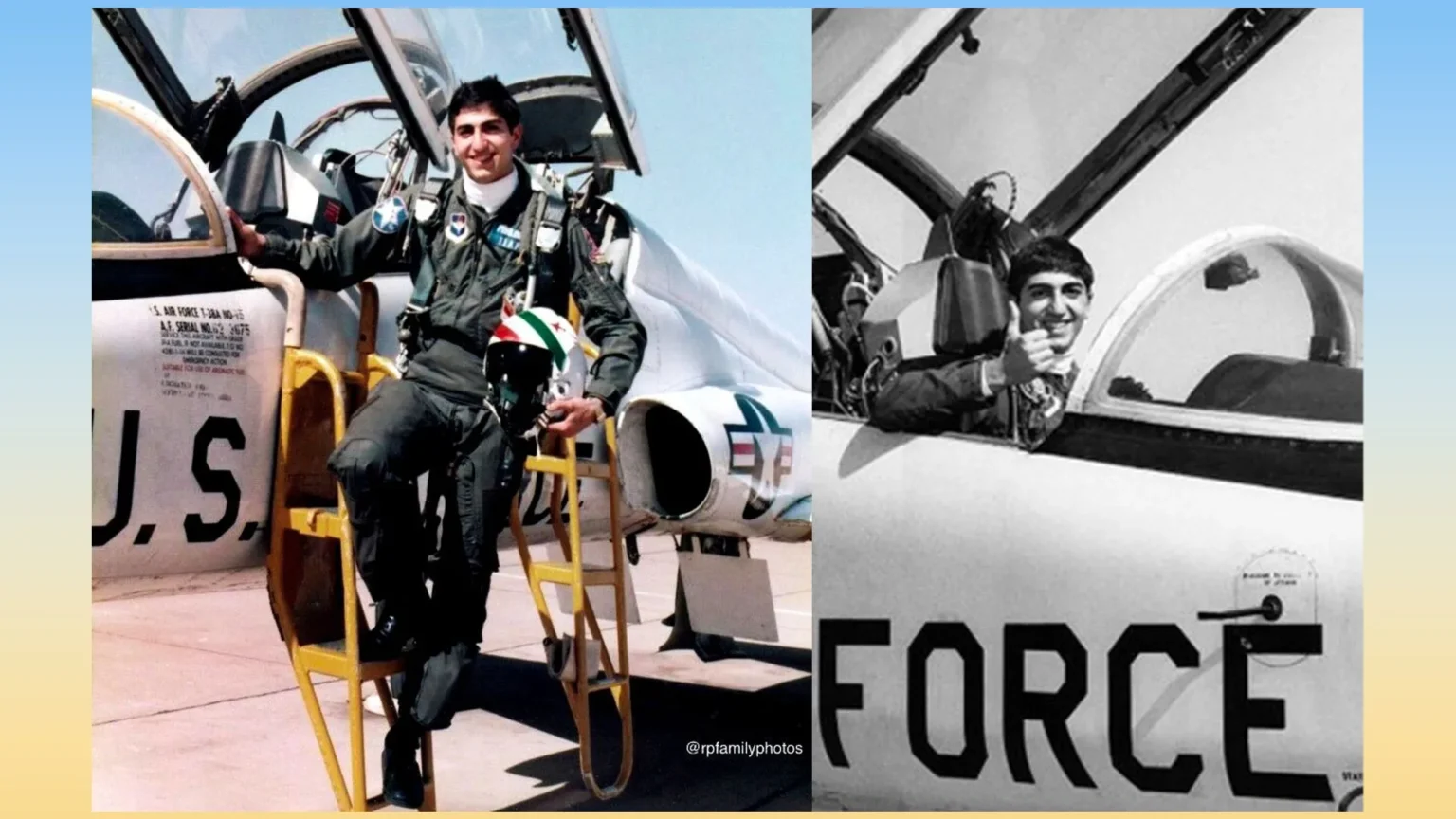
LUBBOCK, Texas — Before Reza Pahlavi became one of the most visible opponents of Iran’s Islamic Republic, he was a 17-year-old military cadet learning to fly jets at Reese Air Force Base outside Lubbock.
Pahlavi arrived in West Texas in 1978 as the crown prince of Iran and heir to Shah Mohammad Reza Pahlavi. Iran and the United States were then close military partners, and Reese trained pilots from allied countries alongside American cadets.
While Pahlavi was in Lubbock, protests and strikes intensified in Iran. His father left the country in January 1979, and revolutionary forces abolished the monarchy the following month.
Pahlavi never returned home. He completed an accelerated version of his flight training and left Reese in March 1979 to rejoin his family in exile.
Now 65, Pahlavi is promoting himself as a potential leader of a temporary government if Iran’s current political system collapses. He says a transitional administration should maintain essential institutions, stabilize the country and prepare for elections and a constitutional referendum.
Whether Iranians inside the country broadly support that role remains uncertain.
Training at Reese Air Force Base
Pahlavi came to Reese as a cadet in the Imperial Iranian Air Force. Historical accounts indicate that he was one of 43 Iranian cadets participating in a yearlong pilot-training program involving the T-37 and T-38 training aircraft.
A Cornell University biography confirms that Pahlavi left Iran in 1978 to complete Air Force training at Reese. The base, which trained American and international pilots for decades, closed in 1997 and was redeveloped as the Reese Technology Center.
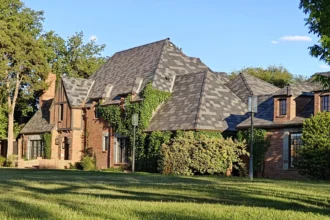
Pahlavi lived in a large house in Lubbock’s Tanglewood neighborhood when he was not staying at the base.
Former Mayor Alan Henry recalled attending events with the young crown prince and described him as formal but approachable. Larry LaFreniere, who was also undergoing pilot training at Reese, remembered Pahlavi playing drums during two informal performances by a local band specializing in 1950s music.
The group performed songs associated with Elvis Presley, Bill Haley and the Beach Boys, according to the original Lubbock Lights report.
Those memories present a casual side of Pahlavi’s brief life in Lubbock. His presence also attracted controversy. In July 1978, approximately 400 Iranian students demonstrated outside his Lubbock residence to protest the shah’s government and American military training for the royal family, according to a contemporaneous Washington Post report.
Security around Pahlavi tightened as the revolution accelerated. The monarchy’s collapse transformed his training assignment into the beginning of permanent exile.
Seeking a role in Iran’s future
Pahlavi has spent much of the past 47 years in the United States, criticizing Iran’s clerical leadership and calling for a secular political system.
During a March interview with CBS News’ “60 Minutes,” he said he was prepared to help lead a transition if the Islamic Republic fell. The interview carried an unusual Lubbock connection: correspondent Scott Pelley also began his journalism career in Lubbock.
Pahlavi has said his proposed transition would not automatically restore the monarchy. His plan calls for an interim administration followed by an elected constitutional assembly, a referendum on a new constitution and national elections.
In a March 14 statement outlining his transition proposal, Pahlavi said his organization was preparing to assume temporary administrative responsibilities if the current government collapsed. The statement represents his political program, not an agreement accepted by Iran’s other opposition movements.
He has advocated secular government, equal legal rights for women, normalized relations with Western and neighboring countries and an end to the Islamic Republic’s support for armed groups abroad. He has also called for Iran’s nuclear program to be placed under strict civilian and international controls.
Pahlavi continues to oppose agreements that leave the clerical system in power. In a July interview with Euronews, he argued that such an arrangement would allow Iranian leaders to regroup rather than produce lasting peace.
His support is difficult to measure
Pahlavi has a committed following among monarchists and other Iranians living abroad. Demonstrators have displayed Iran’s pre-revolutionary flag and chanted his name at rallies, including a February gathering in Munich that drew an estimated 250,000 people, according to the Associated Press.
Some anti-government protesters inside Iran have also used slogans supporting the Pahlavi family. However, internet restrictions, government repression and the absence of reliable nationwide polling make it difficult to measure his domestic support.
Iran’s opposition remains divided among monarchists, republicans, left-wing movements, ethnic organizations and civil-rights activists. Reuters reported in January that Western diplomats and analysts recognized Pahlavi’s visibility but remained cautious about whether he could unite the opposition or govern inside Iran.
Critics also point to repression, inequality and abuses by the SAVAK secret police during his father’s rule. Pahlavi has defended parts of the shah’s record while insisting that Iran’s future political system must be chosen by voters rather than inherited through the royal family.
His support for American and Israeli military action has produced another division. Pahlavi has described outside pressure as a possible means of weakening the Islamic Republic. But interviews conducted by Reuters in southern Iran found residents who opposed both their government and foreign attacks that damaged infrastructure and worsened civilian hardship.
A Lubbock chapter with international consequences
Pahlavi arrived in Lubbock expecting to return home as a military pilot and eventual monarch. Instead, he watched his family’s government collapse from thousands of miles away.
His months at Reese became the dividing line between his life as Iran’s presumed future shah and his decades as an exiled opposition figure.
Today, Pahlavi is again arguing that Iran is approaching a historic transition. His Lubbock acquaintances remember a young pilot who played drums and attended neighborhood gatherings. His supporters now see a potential transitional leader, while his critics question whether a former crown prince who has spent almost five decades abroad can represent Iran’s diverse population.
The answer ultimately depends not on his former royal title or international visibility, but on whether Iranians themselves are able to choose their government through a free and credible political process.