

The 4-1 vote authorized a new design and continued financial planning, but commissioners retained the ability to reject the project before construction begins.
Lubbock County commissioners advanced a revised plan for the proposed Expo Center in January, approving its next development steps despite strong objections from County Judge Curtis Parrish.
The Commissioners Court voted 4-1 on Jan. 27, 2026, to support a new schematic design, retain the project’s north Lubbock location and begin preparing for the county’s possible share of the financing. Parrish cast the only opposing vote.
The decision did not provide final authorization to begin construction. Commissioners would still have to approve the completed design, financing arrangements, construction contract and a guaranteed maximum price before the project could proceed.
Randy Jordan, chairman of the nonprofit Lubbock County Expo Center Inc., or LCEC, presented the revised proposal. The organization has led private fundraising and development work for the public-private project.
According to Lubbock Lights’ original account of the meeting, Parrish questioned whether LCEC’s proposal adequately protected the county’s interests after years of planning and millions of dollars in public expenditures.
Jordan rejected that criticism and said the organization remained committed to completing the venue without relying on county property taxes.
Smaller design reduces projected cost
The revised Expo Center carries an estimated total development cost of approximately $67 million, down from an earlier projection of about $97 million.
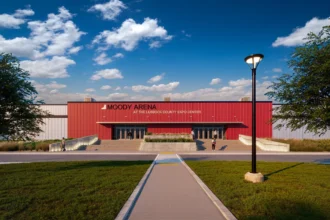
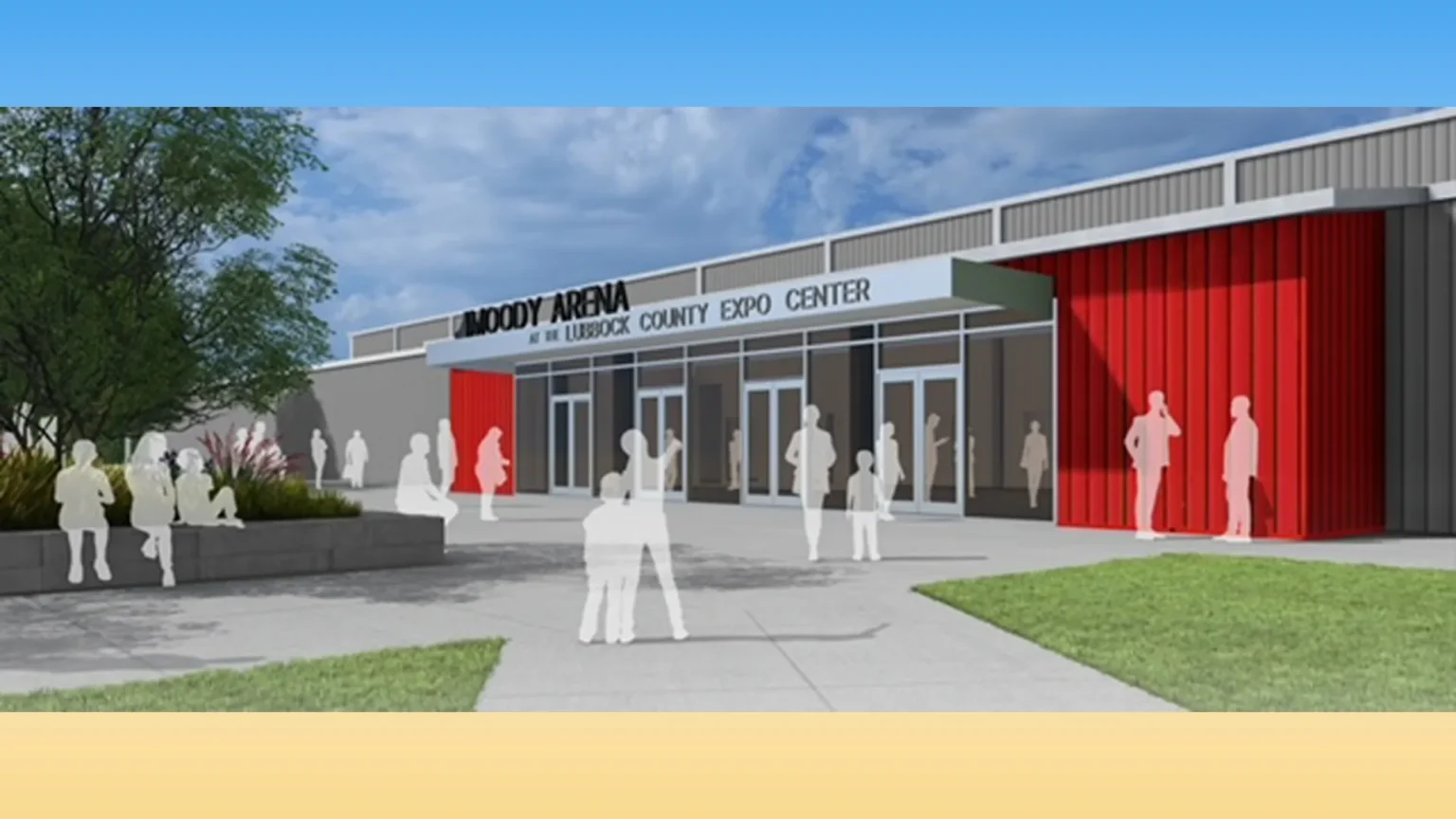
Plans call for a multipurpose venue on roughly 80 acres near North Loop 289 and North University Avenue. The new design is based largely on Taylor Telecom Arena in Abilene and replaces architectural plans that had become too expensive to construct.
LCEC agreed to pay Parkhill approximately $375,000 to prepare the initial schematic design. The January resolution did not require the county to pay that particular design expense.
Later project information described the proposed facility as approximately 165,000 square feet, with 5,500 permanent seats and room for as many as 7,000 people when floor seating is used. The venue would have a concrete floor that could be covered with dirt for agricultural, livestock, rodeo and equestrian events.
The project had previously been considered for a possible downtown location alongside improvements to the Lubbock Memorial Civic Center. Supporters of the north Lubbock site argued that the larger property offers better parking, easier expansion and more space for livestock-related events.
The January resolution kept the Expo Center at its original site and rejected the downtown alternative.
County could finance approximately $32 million
Under the revised financing concept, Lubbock County could borrow roughly $32 million. That debt would be repaid using revenue from dedicated hotel-occupancy and short-term vehicle-rental taxes rather than county property taxes.
Lubbock County voters authorized the venue taxes in 2018. The county subsequently imposed a 2% hotel-occupancy tax and a 5% short-term vehicle-rental tax to support the multipurpose facility.
By January, more than $20 million had reportedly been collected through those taxes. LCEC said private donations and pledges totaled approximately $25 million, although some larger commitments would be paid over several years. That timing could require the nonprofit to obtain separate financing.
The county’s potential bond issue was not approved unconditionally during the January vote. Commissioners still needed documentation showing that the private financing, lease structure and overall budget were sufficient.
Parrish challenges the agreement
Parrish said he supported the concept of an Expo Center but did not believe the January resolution adequately protected Lubbock County.
He told Jordan that LCEC appeared to be prioritizing completion of the project over the county’s broader financial interests. Parrish also questioned the value produced by nearly $8 million already spent on planning and site development.
Jordan said those expenditures had produced usable infrastructure, including the paving of Drake Street, sewer and water connections, electrical work, engineering, rezoning and other site preparation. He acknowledged that several million dollars in architectural work from the earlier design would not be used.
Jordan attributed the setbacks to rising construction costs, the COVID-19 pandemic and difficulties raising private money during and after the public-health emergency. He also noted that LCEC donated the project land to the county.
Parrish proposed two changes to the resolution, but neither received a second from another member of the court. One would have made the North Loop location less definite. The other would have expressly prevented the county from paying any design costs.
Auditor requests additional records
County Auditor Kathy Williams raised separate concerns about the financial information available to her office. She said she had requested five years of audits, ledgers and related documents but had not received everything needed to establish the project’s complete financial position.
Jordan said LCEC had provided annual financial statements and federal tax returns covering 2019 through 2024, as well as independent audits for 2019 and 2020. Additional audits were being completed, he said.
County attorney Ashley Cox acknowledged that communication between the county and LCEC had been inadequate. She said the public-private arrangement was unfamiliar to the participants but maintained that attorneys were working to improve the relationship and protect the county.
Cox also emphasized that commissioners could reject the final project if LCEC failed to provide satisfactory financial documentation.
Two members of the Lubbock County Expo Center Local Government Corporation, Gary Boren and Carl Isett, also questioned the project’s transparency and financial projections. They had opposed the resolution when the oversight board considered it earlier in January.
Isett raised concerns about discarded design work and the possibility that the completed venue could operate at a loss. Project supporters responded that some forecasts did not include potential revenue from naming rights, merchandise and other sources.
Project subsequently advances again
The January action was one in a series of preliminary approvals. By June, the project had grown to approximately 165,000 square feet while remaining within the stated $67 million development budget, according to a subsequent project update.
On June 22, commissioners approved a lease between the county and LCEC on a narrower 3-2 vote. Parrish and Precinct 1 Commissioner Mike Dalby opposed that agreement, citing concerns about county control and the ability to terminate the arrangement. Commissioners Jason Corley, Cary Shaw and Jordan Rackler supported it, according to KCBD’s coverage of the vote.
The lease represented another significant step, but the county still had not simply authorized an unrestricted construction project. Final financing, private contributions, design requirements and the guaranteed maximum construction price remained central conditions before the Expo Center could move from planning into construction.