


LUBBOCK, Texas — Lubbock residents earned the opportunity to vote on a proposal limiting arrests and citations for misdemeanor marijuana possession, but city leaders warned that voter approval might not make the policy legally enforceable.
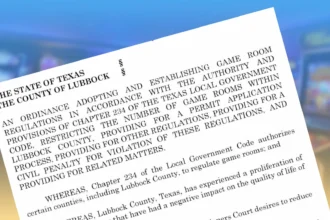
The proposal, called the Freedom Act Lubbock, would have directed Lubbock Police Department officers not to arrest or cite adults for Class A or Class B misdemeanor marijuana-possession offenses, except under specified circumstances. Texas classifies possession of two ounces or less as a Class B misdemeanor and possession of more than two but no more than four ounces as a Class A misdemeanor under the Texas Controlled Substances Act.
The initiative would not have legalized marijuana. State law would have continued to prohibit possession, and the proposal would not have restricted felony investigations, cases involving juveniles or enforcement by agencies outside the Lubbock Police Department.
That distinction became central to the campaign. Supporters described the measure as an exercise in setting local enforcement priorities. Opponents—including every member of the City Council—argued that the city could not instruct its police officers to disregard state drug laws.
Petition collected more than 10,000 signatures
The initiative began in August 2023 when five Lubbock residents filed paperwork to create the proposed ordinance.
Organizers then had 60 days to collect at least 4,800 valid signatures from qualified city voters. They submitted 10,450 signatures in October.
According to the city’s petition-verification announcement, officials reviewed 8,979 signatures, disqualified 3,794 and validated 5,185—enough to certify the initiative.
The City Council subsequently held a public hearing and unanimously rejected the proposed ordinance on Nov. 14, 2023. Under the city’s initiative process, that decision sent the question to voters for the May 4, 2024, election.
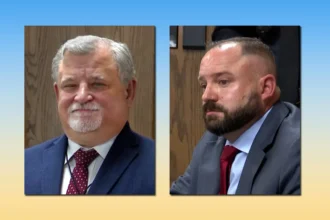
Joshua Shankles, then managing director of Lubbock Compact, told council members that organizers had written the measure with Texas law and Lubbock’s city code in mind. Adam Hernandez, another organizer, argued that people should not be jailed for possessing marijuana for personal use.
Supporters also emphasized the breadth of the signature campaign. Organizers said they had spoken with approximately 13,000 people and collected signatures from residents in many professions.
City officials questioned its legality
Mayor Tray Payne said during the 2023 hearing that he believed the proposal directly conflicted with state law. Other council members raised similar concerns, saying Lubbock was created under Texas law and could not adopt an ordinance inconsistent with state statutes.
Their concern was supported by Section 370.003 of the Texas Local Government Code, which at the time prohibited a municipality, police department or local prosecutor from adopting a policy under which the entity would not fully enforce drug laws.
The Texas Constitution also gives home-rule cities broad authority to govern local matters but states that municipal charters and ordinances cannot contain provisions inconsistent with the state Constitution or general laws enacted by the Legislature.
Supporters maintained that the ordinance would not repeal state law. Instead, they argued, it would establish how Lubbock’s police resources should be used. Similar reasoning had been advanced by organizers of marijuana initiatives in several other Texas cities.
The disagreement created a legal question that likely would have continued even if voters had approved the proposal: Was the initiative a legitimate local enforcement policy, or an unlawful refusal to enforce state law?
Other agencies would remain free to make arrests
The proposed ordinance applied only to the Lubbock Police Department. It could not control the Lubbock County Sheriff’s Office, Texas Department of Public Safety or other state and federal agencies operating inside the city.
Councilwoman Christy Martinez-Garcia warned that different enforcement rules could confuse residents. A person possessing a misdemeanor amount of marijuana might not face arrest by a city officer under the proposed policy but could still be arrested by a sheriff’s deputy or state trooper.
Hernandez acknowledged that limitation in the original Lubbock Lights report. Supporters nevertheless argued that changing the practices of the city’s police department would reduce arrests and allow officers to focus on more serious crimes.
Lubbock was not the first Texas city to face the issue. Voters in Austin, Denton, Elgin, Killeen and San Marcos approved similar initiatives. Those measures produced disputes between activists, city officials and state authorities over whether municipalities could deprioritize marijuana enforcement without directly changing state law.
Voters ultimately rejected Proposition A
When Lubbock’s initiative appeared as Proposition A on May 4, 2024, voters decisively rejected it. Nearly 65% voted against the proposal, according to The Texas Tribune’s election report.
About 35,000 people participated in the municipal election. Hernandez later said supporters had been unable to generate the turnout needed to pass the measure and would need to focus on voter education before considering another effort.
The defeat meant Lubbock never had to resolve the immediate question of whether its police department could legally implement the ordinance. The broader conflict between voter-approved local marijuana policies and Texas law, however, continued in other cities and courts across the state.