


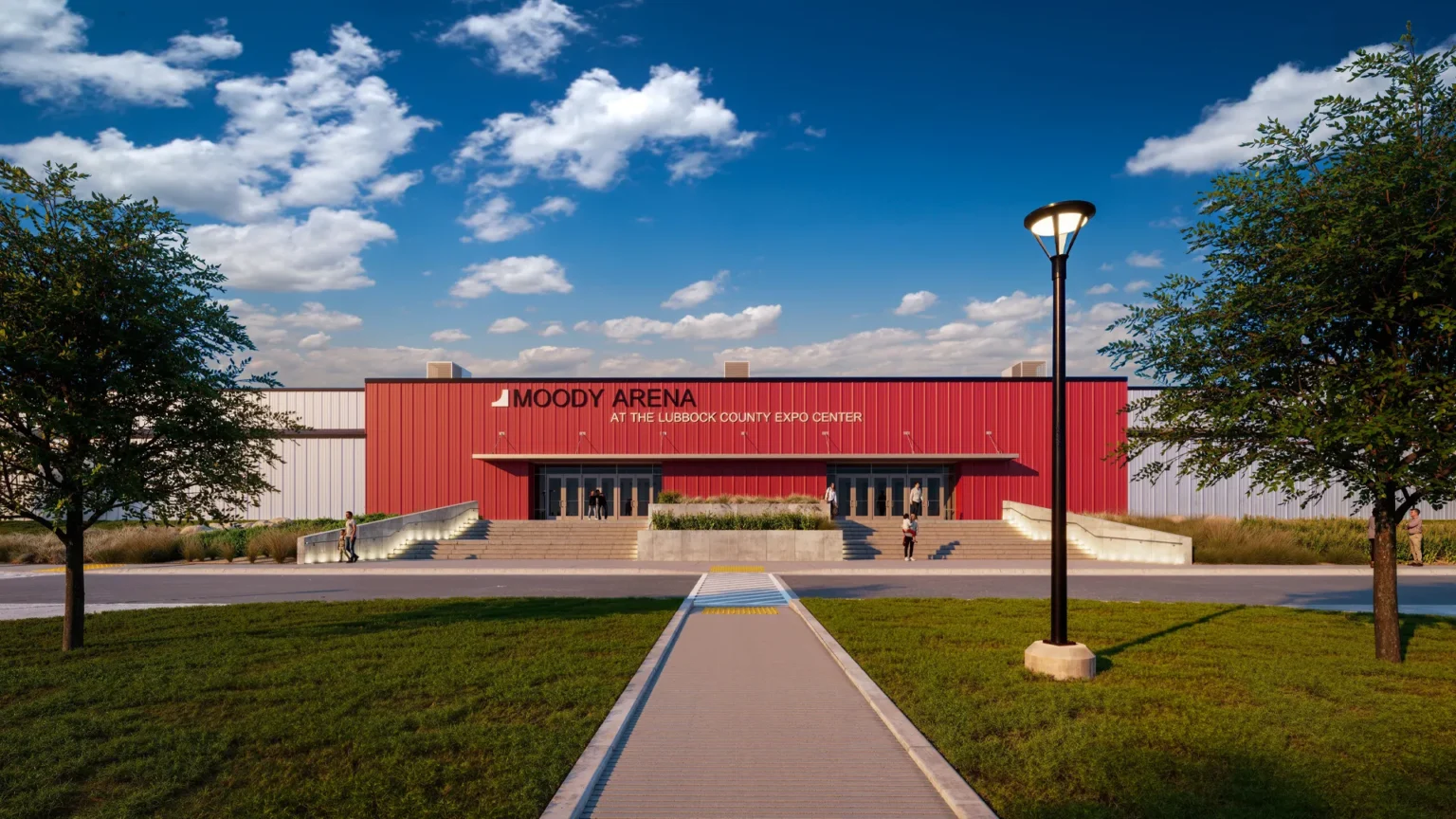
The 3-2 decision advances financing for the north Lubbock venue, although two county officials warned that the agreement provides no simple way to exit during its initial 27-year term.
Lubbock County commissioners approved a long-term lease for the proposed Lubbock County Expo Center on a 3-2 vote, advancing the public-private project while exposing a sharp disagreement over whether the contract adequately protects county taxpayers and preserves the Commissioners Court’s authority.
Commissioners Jason Corley, Jordan Rackler and Cary Shaw voted for the agreement June 22. County Judge Curtis Parrish and Precinct 1 Commissioner Michael Dalby voted against it.
Both dissenters said they supported building an expo center but objected to the lease’s structure. Their central concern was that the county could not simply terminate the agreement if it became dissatisfied with the facility’s management.
The 14-page lease agreement gives the nonprofit Lubbock County Expo Center Inc., or LCEC, the right to operate the future facility for $1 per year. Lubbock County would retain ownership of the property and building.
LCEC would oversee events and revenue opportunities and could hire a separate company to manage day-to-day operations, subject to county approval.
Why approve a lease before construction?
The planned venue would be built on approximately 80 acres near North Loop 289 and North University Avenue. The current concept calls for a roughly 165,000-square-foot multipurpose facility with 5,500 fixed seats and capacity for approximately 7,000 people when floor seating is used.
Project officials estimate construction at about $55 million and total development costs at approximately $67 million.
The county expects to contribute roughly $32 million through revenue bonds. Debt service would come from hotel-occupancy and short-term vehicle-rental venue taxes approved by Lubbock County voters in 2018, rather than county property or general sales taxes.
The private nonprofit is responsible for raising or borrowing the remainder.
County civil attorney Ashley Cox told commissioners that bond counsel recommended having the lease in place before the county seeks preliminary approval from the Texas Attorney General’s Office for the proposed bond financing.
The lease is also important to LCEC’s private financing. Some large donor commitments are payable over several years, leaving LCEC in need of a bank loan or line of credit to cover construction expenses before all pledged contributions arrive. A lender may require LCEC to assign its lease rights as part of the loan security.
The Commissioners Court must separately approve any assignment to a bank.
Approval of the lease did not itself authorize the issuance of bonds or begin construction. Earlier project conditions remain in place, including requirements that LCEC secure donations and a finalized loan sufficient to cover costs beyond the county’s contribution.
Those safeguards were included in a March financing resolution adopted by the project’s Local Government Corporation. The county and LCEC debts must remain separate, and venue-tax reserves are targeted to remain at or above $5 million.
The project is being developed under Chapter 334 of the Texas Local Government Code, which governs sports and community venue projects and the taxes used to finance them.
Dispute centers on termination rights
Parrish’s principal objection was the lack of a unilateral termination clause allowing the county to leave the arrangement for convenience or dissatisfaction.
During the initial term, the agreement can be ended by mutual consent or after a qualifying LCEC default. That means the county generally cannot cancel the lease merely because commissioners disagree with the nonprofit’s management decisions.
Parrish said that structure left the county without sufficient control over a building it would own and help finance. Dalby similarly said he was uncomfortable approving the document even though he continued to support the Expo Center itself.
LCEC Chairman Randy Jordan argued that the nonprofit—and any lender financing its private contribution—also needs long-term certainty. If the county could cancel the lease at any time, LCEC could remain liable for a 15- or 25-year loan without the ability to operate the building and generate revenue.
Supporters said the lease should be viewed primarily as a real-estate and financing document. A separate operating agreement, still to be negotiated, is expected to define performance standards and the county’s oversight of events, management and finances.
Corley said concerns about unsatisfactory operations should be addressed in that future agreement rather than through an unrestricted right to terminate the lease.
That explanation did not satisfy Parrish, who argued that waiting for a later operating agreement was risky after the county had already granted broad lease rights.
What protection does the county receive?
The agreement includes several provisions intended to protect the county.
Lubbock County is entitled to appoint at least four members of LCEC’s governing board, although county-appointed members cannot constitute 49% or more of the full board. LCEC must provide annual financial reporting, maintain the property, carry insurance and pay utilities and operating expenses.
The county can inspect the facility and must approve the day-to-day operator selected by LCEC. The nonprofit is generally prohibited from placing liens on the county’s property and assumes liability associated with injuries, deaths or property damage resulting from operation of the Expo Center.
LCEC can be declared in default if it abandons the project, uses it inconsistently with its public purpose, fails to perform maintenance or financial-reporting obligations, files for bankruptcy or becomes subject to an unresolved involuntary bankruptcy.
A default can provide the county with termination and other contractual remedies. The disagreement is whether those defined events are broad enough to cover poor management or financial performance before the situation becomes severe.
According to KCBD’s report on the vote, Parrish argued that the mutual-termination provision was inadequate because LCEC could refuse to end the lease. Jordan responded that allowing either party to withdraw arbitrarily would make long-term financing unworkable.
Is it a 27-year or 77-year commitment?
The initial term is 27 years: up to two years for construction followed by 25 years of operation.
The agreement provides for two possible 25-year extensions, creating a maximum potential relationship of 77 years. County attorneys and Commissioner Shaw said those extensions are not automatic and require agreement from both sides.
Under that interpretation, the county could decline to renew after the first 27 years. During the initial term, however, it would need LCEC’s consent or grounds for default to terminate early.
That distinction became the heart of the 3-2 vote. Supporters saw the long initial term as necessary for LCEC to borrow money and operate the venue. Opponents saw it as a major transfer of control before the building, financing package and operating agreement were complete.
The project’s previously announced timetable called for attorney-general review of the county bonds, approval of any lease assignment to LCEC’s lender and a later Commissioners Court vote on final bond issuance.
Until those steps are completed, the Expo Center remains a proposed project with an approved lease—not a fully financed or authorized construction program.