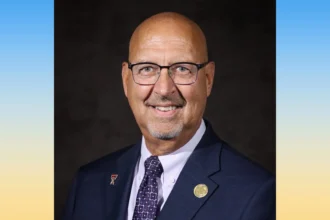


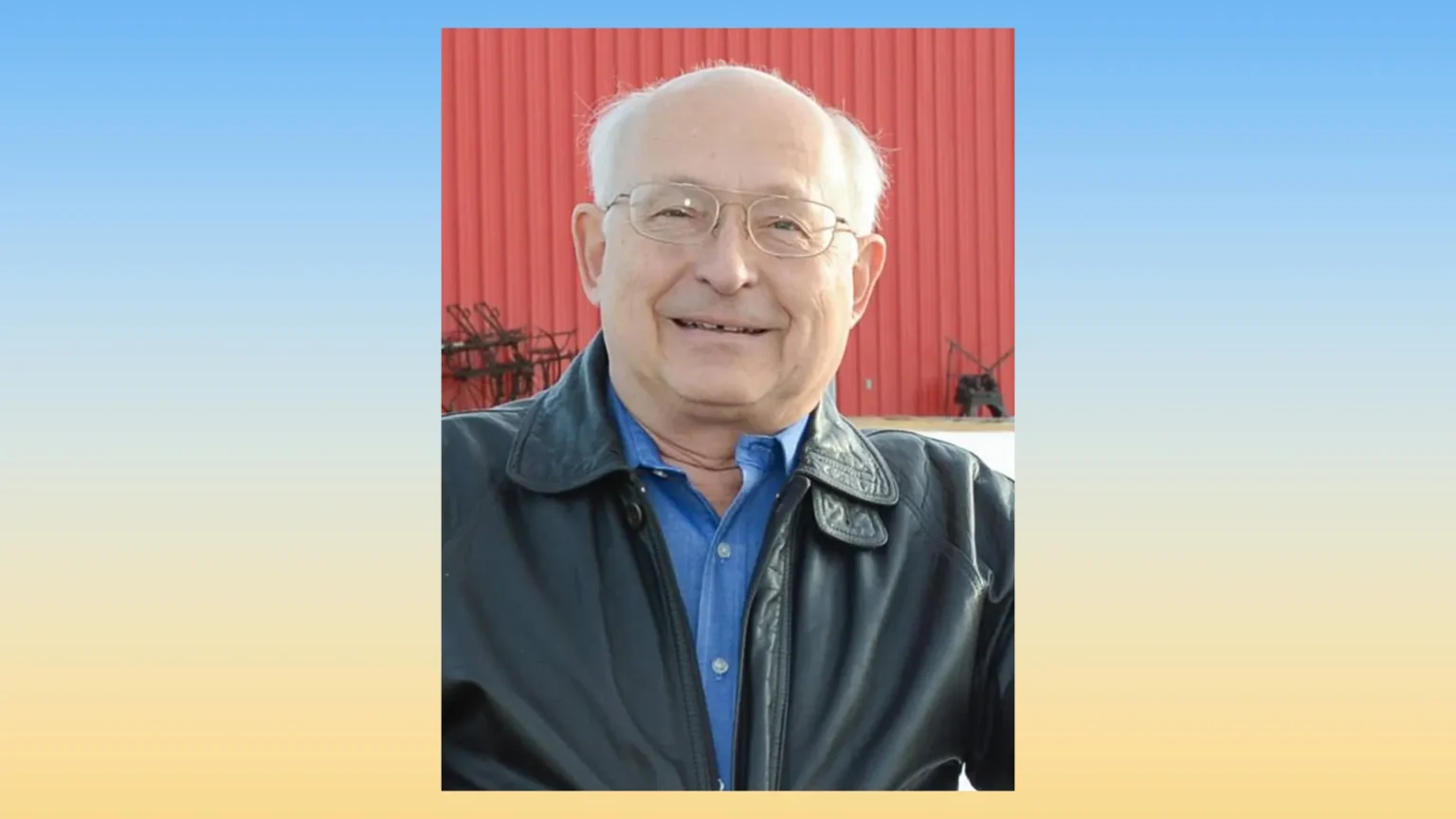
Dr. Donald May entered the 2026 race for Texas’ 19th Congressional District by presenting himself as a citizen candidate whose experience came from medicine, military service and agriculture—not a career in elected office.
The Lubbock Republican and retired retina surgeon sought the seat being vacated by Rep. Jodey Arrington. May said he wanted to serve a limited number of terms before returning to West Texas, describing himself as a “common citizen” rather than a politician.
Although May did not advance from the March Republican primary, his campaign offered an unusual combination of medical experience, farming knowledge, military service and interest in emerging technology.
Career in medicine and the Air Force
May grew up in Illinois and studied nuclear physics and immunochemistry before attending medical school. He received his medical degree from the University of Illinois College of Medicine in 1972 and completed specialized training in ophthalmology and retinal surgery.
May served in the U.S. Air Force at Wilford Hall Medical Center in San Antonio, where he treated military personnel and civilians with traumatic eye injuries. He later worked at several medical institutions before joining the Texas Tech University Health Sciences Center in 1989.
According to May’s account in a February Lubbock Lights candidate profile, he served as a tenured professor and chairman of the ophthalmology department until 1994.
May specialized in retinal and vitreous surgery, including the repair of severely injured eyes. He said he adopted vitrectomy techniques early in their development and occasionally designed instruments needed for complex procedures.
During a separate KTTZ candidate interview, May described himself as a non-practicing retina surgeon who had moved into consulting. KTTZ also reported that he served four terms on the Lubbock Board of Health and worked with veterans who needed trauma care.
Farming shaped his economic views
May called himself a sixth-generation farmer whose family owns agricultural land in Illinois. He said his father began working as a hired farm laborer at age 13, while his mother left school to work in a clock factory.
That family history influenced May’s focus on commodity prices, production expenses and access to agricultural markets. He said farmers were being squeezed between the relatively low prices received for crops and the rising costs of fertilizer, chemicals, fuel, machinery and other inputs.
May supported President Donald Trump’s use of tariffs as a negotiating tool, arguing that American producers had long faced trade barriers when selling crops and dairy products abroad. He credited the administration’s negotiations with improving some commodity markets.
His position acknowledged a difficult economic balance: Farmers and ranchers need prices high enough to remain profitable, while consumers want affordable food. May said government policy should seek better markets for producers without ignoring household costs.
He also supported farmers’ ability to repair their own machinery. May said his family’s operation used older equipment, upgrading it with computers and completing repairs locally instead of depending entirely on manufacturers.
Health care and affordability
May’s medical career informed his views on health policy. He said rural hospitals and patients faced problems created by the way Medicare, Medicaid and prescription-drug programs are financed.
He supported examining pharmaceutical prices and expanding health savings accounts. May argued that patients should not lose their sight or face other serious consequences because they cannot afford medication.
At the same time, he defended the role of large pharmaceutical companies in financing expensive drug research. His stated goal was to reduce costs for patients while preserving incentives for companies to develop new treatments.
May also proposed declining his congressional salary. He said the money would instead support scholarships and other opportunities for conservative students from the district.
Border, energy and artificial intelligence
May supported stronger border enforcement and said the federal government must know who is entering the country. He favored additional physical barriers along the U.S.-Mexico border and praised Trump’s immigration policies.
On energy, May called for continued reliance on oil and natural gas while expressing interest in nuclear power. He argued that nuclear generation could help meet the substantial electricity demands of artificial-intelligence systems and data centers.
May criticized the performance of wind and solar generation during the February 2021 Texas freeze. However, the official Federal Energy Regulatory Commission review found that failures affected multiple types of generation. Natural gas-fired facilities represented 58% of the units experiencing outages, reductions or failures to start.
Artificial intelligence was one of May’s most distinctive campaign issues. He said the United States must remain ahead of China in advanced computing because AI could influence economic competitiveness, cybersecurity and missile-defense systems.
May envisioned West Texas playing a larger role in that industry because of the region’s available land, energy production and research capacity at Texas Tech. He also warned against selling advanced computer chips to China.
Not his first congressional campaign
Although May described himself as a nonpolitician, the 2026 campaign was not his first attempt to win the District 19 seat. He was also a candidate in the 2003 special election and the 2014 and 2016 Republican primaries, according to an earlier KCBD candidate biography.
May supported congressional term limits, arguing that extended service can tempt elected officials to pursue influence and personal status. He said he intended to serve four or five terms if elected and then return home.
Campaign ended in March primary
May finished fifth in the seven-candidate Republican primary. He received 5,416 votes, or approximately 7% of the total, according to published election results.
Tom Sell led the primary and advanced to a runoff with Abraham Enriquez. Sell later won the Republican nomination and is now running against Democrat Kyle Rable and independent candidate Michael Garcia in the November general election.
May’s campaign did not produce the result he sought, but it highlighted a perspective rarely represented in a single congressional candidate: that of a military physician, agricultural producer and longtime advocate for conservative policies who said public office should remain temporary service rather than a permanent profession.