


Editor’s note: The lawsuit was filed in 2022. After surviving two dismissal attempts, it ended in a settlement with the Trump administration in May 2026.
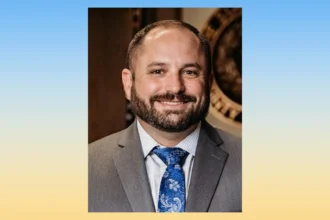
The parents of a slain Army veteran with deep Lubbock ties joined a federal lawsuit accusing the Biden administration of violating a law named after their son by providing assistance that allegedly benefited the Palestinian Authority.
Stuart and Robbi Force were among the plaintiffs in Jackson v. Biden, filed in December 2022 in the Northern District of Texas. The other plaintiffs included Republican Rep. Ronny Jackson of Texas and Sarri Singer, an American survivor of a 2003 bus bombing in Jerusalem.
Their case centered on the Taylor Force Act, a 2018 law restricting certain American economic assistance that directly benefits the Palestinian Authority.
Taylor Force’s connection to Lubbock
Taylor Force moved to Lubbock with his family in 1998. He attended Smith Elementary School and Irons Middle School and became an Eagle Scout with a local Boy Scout troop.
After graduating from the New Mexico Military Institute’s high-school program, Force attended the U.S. Military Academy at West Point. He served in the Army in Iraq and Afghanistan before enrolling in Vanderbilt University’s graduate business program.
Force was visiting Israel with other Vanderbilt students when a Palestinian attacker stabbed and killed him in Jaffa on March 8, 2016. He was 28.
A congressional announcement supporting the legislation described Force as a Lubbock native, Army veteran and graduate student.
What the Taylor Force Act prohibits
Congress passed the Taylor Force Act with bipartisan support, and President Donald Trump signed it in March 2018.
The law restricts Economic Support Fund assistance for the West Bank and Gaza that directly benefits the Palestinian Authority unless the secretary of state certifies that the authority and associated organizations have met several conditions.
Those conditions include taking credible steps to end violence against Americans and Israelis, terminating payments connected to acts of terrorism, revoking laws authorizing such compensation and publicly condemning the violence. The complete restrictions and exceptions appear in 22 U.S.C. §2378c-1.
The law contains limited exceptions for the East Jerusalem Hospital Network, certain wastewater projects and childhood-vaccination programs.
Congress enacted the legislation in response to the Palestinian Authority’s system of providing payments to prisoners convicted of attacks and to the families of deceased attackers. Critics commonly call the system “pay to slay.” Palestinian officials and supporters have described portions of it as social welfare for prisoners and affected families.
The allegation against the Biden administration
The plaintiffs claimed the Biden administration resumed assistance to the West Bank and Gaza through nongovernmental organizations and other intermediaries in ways that still benefited the Palestinian Authority.
Their legal argument did not depend solely on money being transferred directly into the authority’s accounts. They contended that funding services the authority would otherwise be expected to provide—including infrastructure, public health and economic programs—freed other Palestinian Authority resources for its prisoner-payment system.
The Biden administration disputed that interpretation. Government attorneys argued that the Taylor Force Act did not prohibit all assistance to Palestinians. In their view, Congress restricted aid that “directly benefits” the Palestinian Authority while allowing humanitarian and development assistance delivered through other organizations.
A Government Accountability Office report explains that American assistance to Palestinians has historically been administered primarily through the U.S. Agency for International Development. The report also notes that such projects are subject to federal antiterrorism requirements and recipient-vetting procedures.
The legal dispute therefore turned substantially on what Congress meant by “directly benefits.”
Federal judge allows central claim to continue
The Biden administration asked the court to dismiss the lawsuit, challenging the plaintiffs’ standing and arguing that foreign-assistance decisions were largely committed to State Department discretion.
In February 2024, U.S. District Judge Matthew Kacsmaryk dismissed one of the plaintiffs’ legal theories but allowed their main Administrative Procedure Act claim to proceed.
The judge ruled that the plaintiffs had adequately alleged standing and presented a plausible claim at that preliminary stage. He concluded that the State Department’s decisions were potentially reviewable because the Taylor Force Act supplied standards for determining whether assistance directly benefited the Palestinian Authority.
Importantly, the ruling did not establish that the Biden administration had violated the law. It only determined that the plaintiffs’ central allegations were sufficient to survive dismissal and continue toward evidence gathering and a possible decision. The full opinion is available through the federal court record.
The court rejected another attempt to dismiss the amended lawsuit later in 2024.
Lawsuit ends with 2026 settlement
After Donald Trump returned to office, the case name changed from Jackson v. Biden to Jackson v. Trump. The parties reached a settlement on May 19, 2026.
Under the signed settlement agreement, the federal government agreed to comply with the Taylor Force Act when considering Economic Support Fund assistance for the West Bank and Gaza.
The agreement requires senior State Department officials to consider factors including:
- The assistance’s intended beneficiary or end user
- Whether the Palestinian Authority receives the funding directly
- Whether payments go to the authority’s creditors
- How much control the authority exercises over the recipient
- Whether the assistance replaces services normally provided by the authority
The government also agreed to preserve records concerning assistance provided between January 2021 and January 2025 for seven years. The settlement remains effective for 10 years and creates a procedure allowing either side to seek court enforcement if it believes the agreement has been violated.
Each party agreed to bear its own legal expenses. The settlement resolved the lawsuit without a final trial determining whether every challenged Biden-era aid program violated the Taylor Force Act.
For Stuart Force, the litigation extended an effort that began after his son’s death: ensuring that American assistance does not support or indirectly sustain payments Congress determined could encourage terrorism.